Material
Carpet for Stairs, Bedrooms & Basements in Maple Ridge
Carpet is soft fibre tufted into a backing and stretched over an underlay. It has gone out of fashion in living rooms, but it's still the floor most people want on a staircase, in bedrooms and in a dry basement rec room, because nothing else is as warm, as quiet or as forgiving if someone slips.
With carpet, you choose and buy the carpet and WoodPro installs it, on stairs and in homes across Maple Ridge, Pitt Meadows, Langley and the Lower Mainland. That makes this page the one to read before you go to the carpet store. It explains the styles you'll be shown, what the numbers on the label mean, and what a staircase needs, so the carpet you pick holds up where you put it. How it goes in, the underlay, the stretching and the seams, is on the Carpet Installation page.
Why homeowners choose it
Grip and a soft landing on stairs
Carpet gives a sure footing in socks and a softer landing if someone misses a step. That's why so many families keep it on the stairs even when every other floor in the house goes hard.
Warm and quiet
It's warm underfoot in bedrooms and cool basements, and it soaks up footsteps, so less noise carries to the rooms below and next door.
Forgiving of the subfloor
Carpet and its underlay hide small dips and bumps that a click-together hard floor would need levelled first. A sound, well-fastened subfloor is usually enough.
Any colour, feel and texture
From a tight loop to a deep, soft cut pile, carpet comes in more colours and textures than any hard floor, and you choose exactly the one you want from the store.
The honest version
Pros and cons
Pros
- The safest-feeling floor on stairs: better grip in socks and a softer landing than any hard tread
- Warm and soft underfoot, which suits bedrooms and basement rooms on concrete
- Quiet: footsteps are absorbed instead of carried to the floor below
- Hides small subfloor dips that a hard floor would need levelled first
- You choose the exact carpet you want, from any store
Cons
- Not for wet areas. Spills and pet accidents can soak through to the underlay, and a flooded basement usually means replacing both
- Wears in walkways and on the front edge of each step, and generally doesn't last as long as a hard floor
- Holds dust and pet hair, so it needs regular vacuuming to stay clean
- Can't be sanded or refinished. If it ripples it can be re-stretched; once it's worn or badly stained it's replaced
- WoodPro doesn't supply carpet, so you'll choose and buy it yourself before the install
Cut pile, loop or cut-and-loop: the carpet styles explained
Every carpet starts as loops of yarn pushed through a backing. What happens to those loops decides how the carpet looks, how it feels and how it wears, and it's the first thing to settle at the store.
Cut pile has the tops of the loops cut off, leaving upright tufts. It's the soft, familiar carpet in most bedrooms, and it comes in a few styles. Plush, or velvet, has short, even tufts with a smooth, formal look, but it shows every footprint and vacuum line. Textured, sometimes sold as trackless, has fibres twisted at different angles, so footprints barely show. It's the most common choice in homes for that reason. Frieze has long, tightly twisted fibres that curl over, giving a casual, slightly shaggy look that hides wear and dirt well.
Loop pile keeps the loops uncut. Level loop, often called Berber, is low, dense and hard-wearing, which is why it shows up in rec rooms and offices. Its weakness is snags: a claw or a dragged toy can catch a loop and pull a run across the room. For homes with cats or dogs, a cut pile is the safer pick.
Cut-and-loop mixes the two, with some loops cut and some left whole, to make a pattern in the surface. It hides soil well and adds texture, but the pattern has to be lined up carefully at seams and on stairs.
For stairs, think about the front edge of each step. A carpet that wraps over the nose opens up slightly, and a thin or loose carpet shows its backing there, which is called grinning. A dense cut pile or a tight, low loop wraps the nose without showing the backing. Long shag and big loops are hard to wrap neatly and wear fastest on stairs.
Reading a carpet label: fibre, face weight, density and twist
The back of a carpet sample, or its spec sheet, has more useful information than the front. Four things on it matter most.
Fibre. Nylon is the most resilient: it springs back after being walked on, so it's the fibre for stairs, halls and family rooms. Polyester is soft, holds colour well and resists water-based spills, and it usually costs less, but it flattens sooner under heavy traffic. Triexta sits between the two. Wool is the natural option, resilient and slow to burn, but it costs more and doesn't suit a damp basement. Solution-dyed fibre, coloured before it's spun, resists fading and stains best. There's more on fibres, room by room, on the Carpet Installation page.
Face weight is how much yarn is in the pile, in ounces per square yard. More yarn usually means a fuller carpet, but on its own it can mislead, because a tall, loose pile weighs as much as a short, tight one. Density is the better guide: how closely the tufts are packed. Bend a sample back on itself. If you can see a lot of backing between the tufts, it will crush sooner than a shorter, tighter carpet.
Twist is how many times each tuft is twisted per inch. A higher twist holds its shape and resists matting longer, which matters most on stairs and in hallways. Two carpets that feel the same in the store can wear very differently because of twist alone.
Finally, check what the manufacturer says about the underlay. Most carpet warranties set a maximum thickness and a minimum firmness for the pad, and some styles, loop carpets especially, need something thinner and firmer than a plush. A thick, soft pad on stairs makes the edge of each step feel mushy, so stairs get a firm pad. The right pad for your carpet and room is part of the install: see Carpet Installation.
Carpet on stairs: what lasts, how much to buy, and recent stair jobs
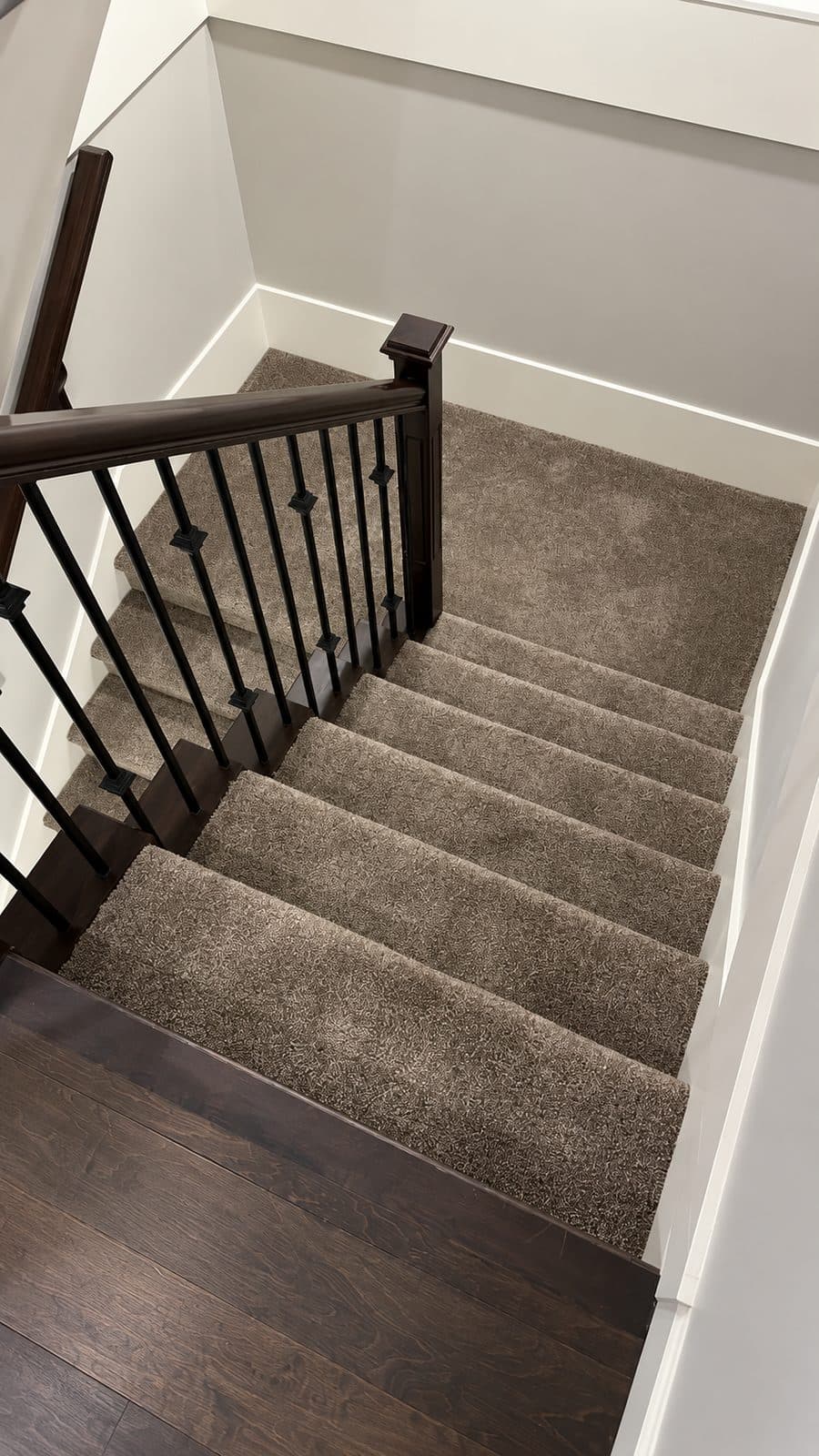
Stairs take more wear than any other carpet in the house. Every foot lands in the same spot on every step, and the front edge is bent and scuffed on every trip. That's where a dense nylon, a high twist and a firm pad earn their price. The pile should run down the stairs, so every step wears and looks the same.
Stairs also use more carpet than their floor area suggests. Each step needs enough to cover the tread, the riser and the wrap over the nose, and the pieces are usually cut so the pile runs the same way on every step. If you can, book the free on-site measure before you order. The staircase, the seams in the rooms and the pile direction all change how much carpet you need, and running short means a second order that may not match the first.
There are two common ways to carpet a staircase. A waterfall install runs the carpet over the nose and straight down to the next step. A capped, or Hollywood, install wraps it tightly around the nose and under it, for a more tailored look. Open-sided stairs, winders and a landing at the top each need their own plan, and that's worked out at the measure.
You can see what it looks like in our recent work. In an Albion home in Maple Ridge, new carpet went on the stairs and landing alongside a new main floor: see the Albion staircase in Our Work. For more carpeted, wood and mixed staircases, browse the Our Work gallery.
If you'd rather the stairs matched a new hard floor instead, that's Custom Stairs: the carpet comes off and treads, risers and square nosings go on. Keeping carpet on the stairs while the floors around them go hard is also a common, sensible mix. The detail that matters is the top step, where the hard floor on the landing meets the carpet going down.
What you get
- Your free on-site measure, with no obligation, before you order the carpet
- You choose and buy the carpet; WoodPro installs it
- Old carpet, underlay, tack strip and staples taken up, where there's old carpet
- A check of the bare subfloor, with loose or squeaky spots fastened down
- Underlay matched to the carpet and the room, with a firm pad on stairs
- Power-stretched installation, with seams kept out of the main walkways where the room allows
- Stairs fitted with the pile running down every step
- Tidy edges at doorways and the top step where the carpet meets your other floors
FAQ
Carpet: common questions
Something we haven't covered? Ask — the person who answers is the one who does the work.
What's the best carpet for stairs?
A dense, cut-pile nylon with a high twist, on a firm underlay. Nylon springs back after being walked on, so the stairs don't wear a flat path down the middle. Density stops the backing showing where the carpet wraps over each nose. Avoid long shag, which is hard to wrap neatly, and big loops, which snag. A tight, low loop can work if there are no pets with claws.
Do you sell the carpet?
No. You choose and buy the carpet, and WoodPro installs it. That way you can pick from any store and any range. It helps to have the free on-site measure first, because the stairs, the seams and the pile direction decide how much carpet to order.
How much does carpet installation cost?
The online estimator shows $4 to $7 per sq ft for installation, before GST, with the carpet itself bought by you. Taking up old carpet, underlay, tack strip and staples is $1.00 to $1.25 per sq ft. Stairs, seams and the number of rooms move the price within the range, and the free on-site measure gives you the real number.
Is a heavier face weight always better?
Not on its own. Face weight counts how much yarn is in the pile, so a tall, loose carpet can weigh the same as a short, dense one and wear much worse. Compare density and twist alongside it. On stairs and in hallways, a shorter, denser, higher-twist carpet usually outlasts a heavier plush.
Can carpet go in a basement?
On a dry slab, yes, with a suitable underlay, and a synthetic fibre rather than wool. Test the slab first: tape a square of clear plastic to the bare concrete, seal the edges and look under it after a day. Fog or a darker patch means moisture is coming through. If the basement has ever had water on the floor, choose something that survives getting wet, like luxury vinyl plank.
Can I see carpet jobs you've done?
Yes. The Our Work gallery has our recent staircases, including new stair carpet in Albion, Maple Ridge. For your own home, call (604) 787-5557 to book the free on-site measure. Danny usually calls back the same day.
Goes well with
Related services
Carpet Installation
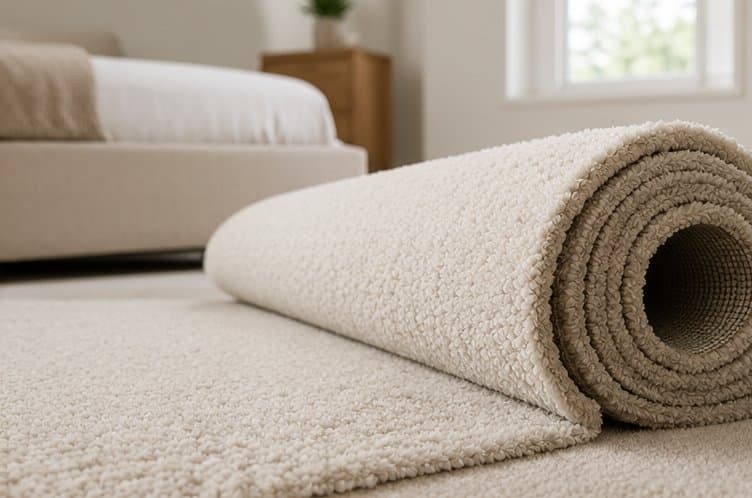
Carpet for bedrooms, stairs and basements, laid on the right underlay and power-stretched so it stays flat.
Learn more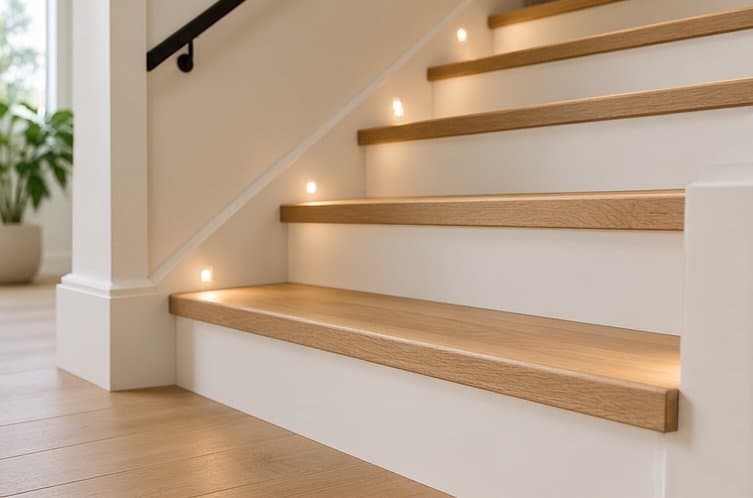
Custom Stair Installation
The carpet comes off and treads, risers and custom square nosings go on, matched to your new floor and planned for safe footing.
Learn more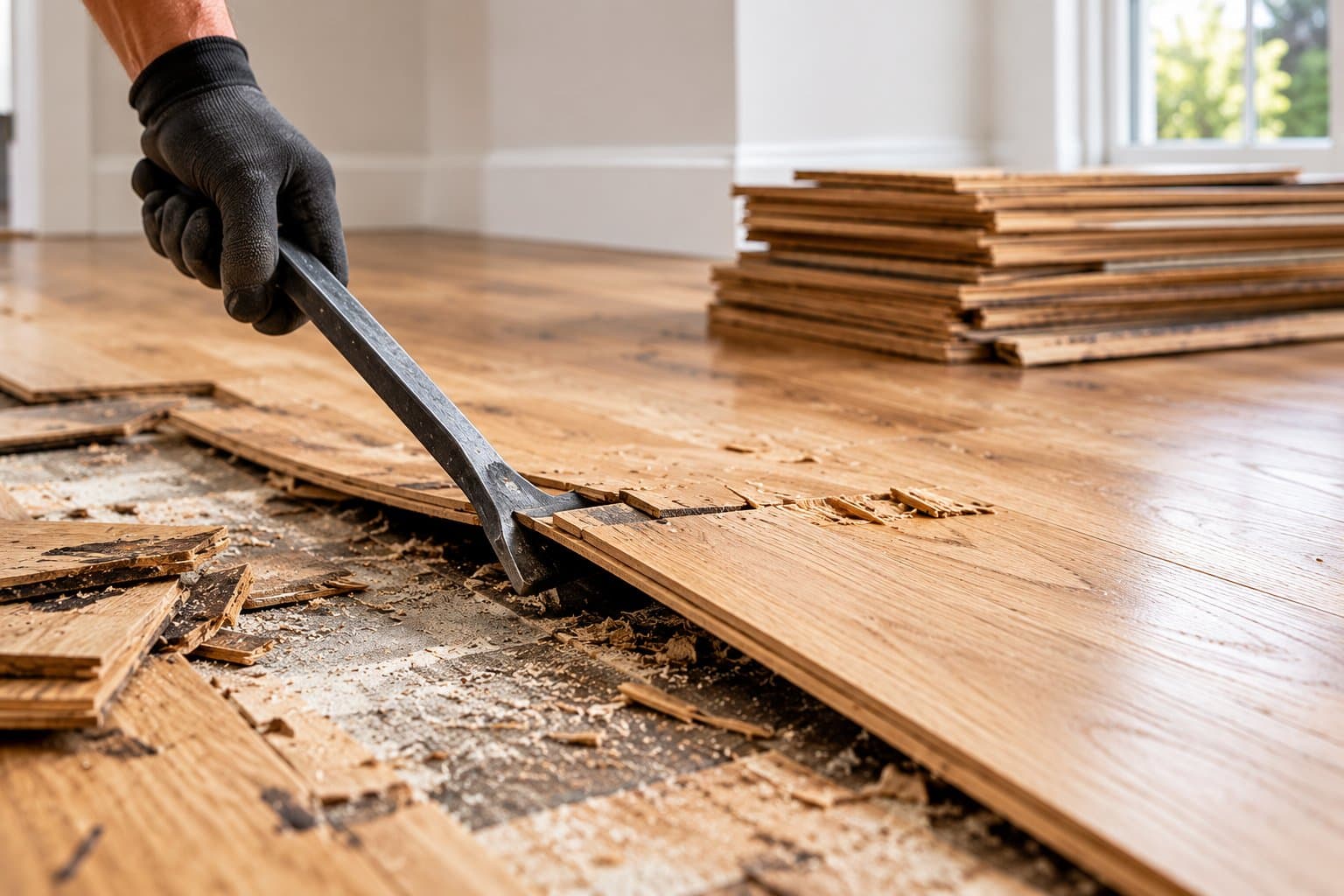
Floor Removal & Disposal
Old carpet, laminate, vinyl and tile taken up and hauled away, with the bare subfloor checked and pre-1990 vinyl and adhesive tested for asbestos before it's disturbed.
Learn more
Free Estimate
Let's talk about your floor.
Call (604) 787-5557 or request a Free Estimate online. The on-site measure is free, there's no obligation, and you'll usually hear back the same day.