Service
Custom Stair Installation, Matched to Your New Floor
The stairs are often the first thing you see from the front door, and they are where a new floor either carries on through the house or stops. A new floor at the bottom of a flight of worn carpet looks unfinished. Stair trim that is almost the right colour draws more attention than a planned contrast would. Stairs are also where people fall, so they need more planning than any other part of a flooring job.
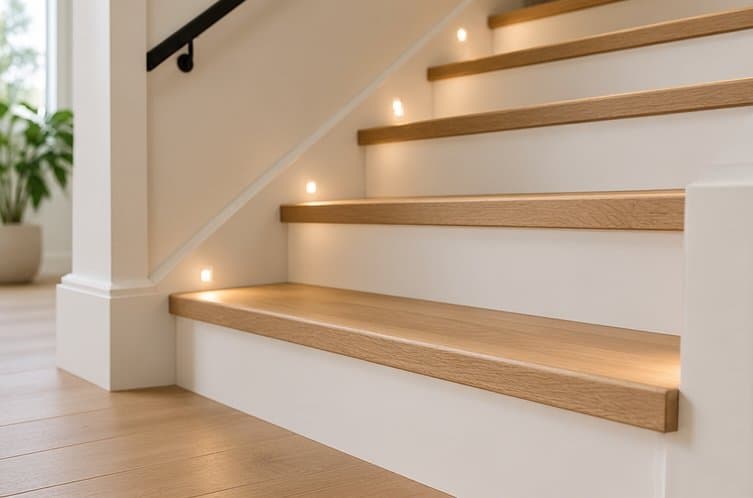
WoodPro Flooring takes the carpet off your stairs and covers each tread and riser in the same flooring as your main floor. The front edge of every step gets a custom square nosing made to match. Danny comes to look at your staircase for a free on-site measure, with no obligation, anywhere in Maple Ridge, Pitt Meadows and the Lower Mainland. He explains the options before you commit to anything.
Why it matters
Stairs that match the floor
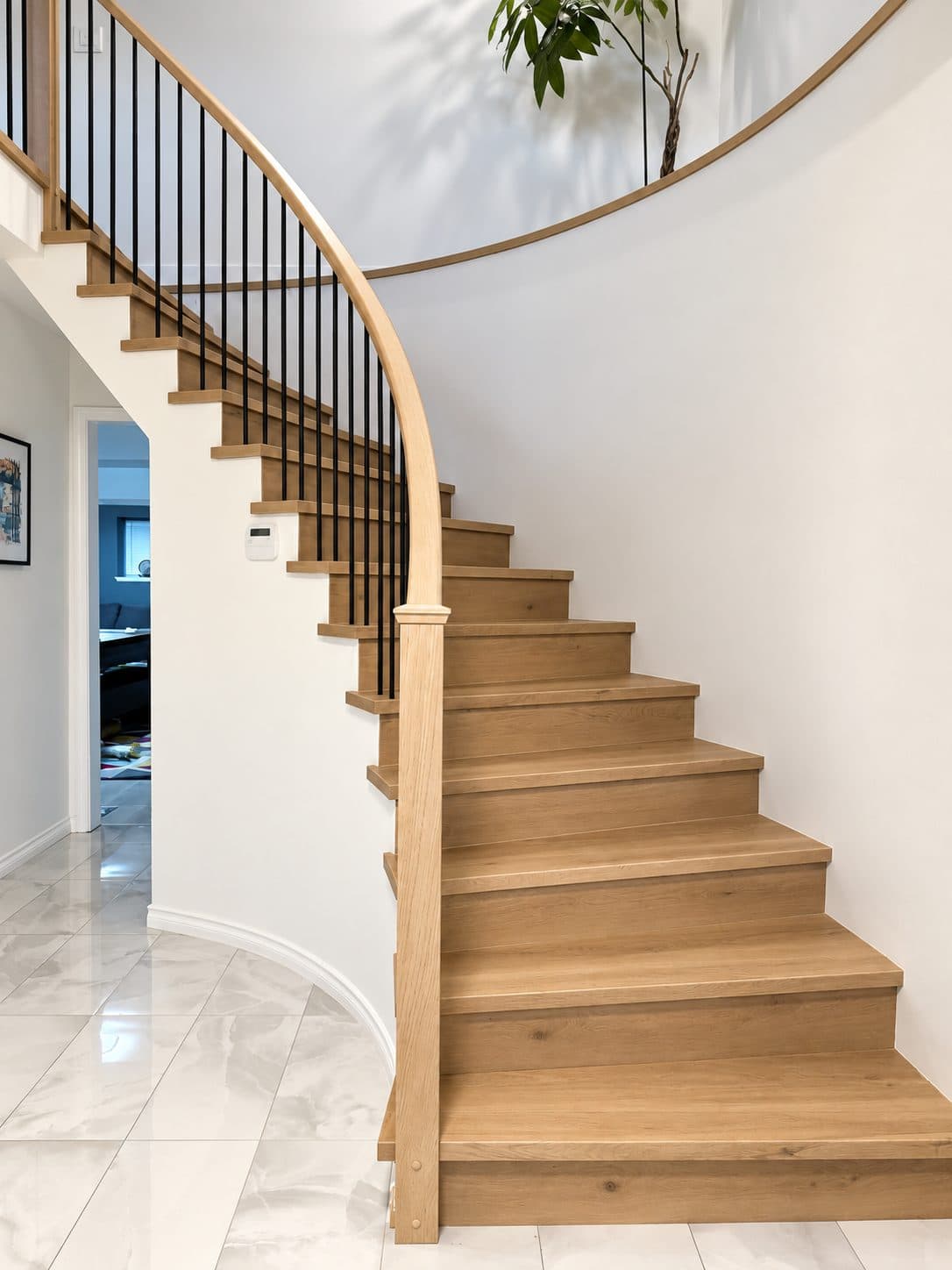
Treads, risers and nosings are done in the same material as your main floor. The colour and grain carry on from one level to the next instead of stopping at the bottom step.
Square nosings made to match
Each step gets a square front edge made to match your floor, not a rounded add-on trim in a colour that is almost right.
Planned for safe footing
Step heights are worked out with the floors at the top and bottom, and nosings are fixed down firmly. You get honest advice on grip before you choose a surface.
No more worn stair carpet
Hard treads don't wear bald at the front edge or hold dust and pet hair the way stair carpet does. A damp cloth cleans them.
The honest version
Pros and cons
Pros
- One material from the front door to the upstairs hall, so the house reads as one finished space.
- Squeaky or loose steps can be fastened down while the stairs are bare, which is hard to do properly through carpet.
- Hard treads suit homes with pets or allergies better than stair carpet, which holds hair and dust in the corner of every step.
- Stair material ordered with the floor comes from the same production batch, so the colour matches.
Cons
- A hard staircase has less grip than carpet, especially in socks, and a fall on a hard step hurts more.
- It is louder. Footsteps on hard treads carry through the house more than on carpet.
- Each step is cut, glued and fitted by hand, so stairs cost more for their size than open floor.
- When the nosing matches the tread exactly, step edges are harder to see in dim light.
What's under stair carpet, and why stairs take longer than they look
Stair carpet is held down by a strip of tack nails at the back of each step and dozens of staples along the front edge. All of it has to come out, down to the last staple, or the new tread won't sit flat.
Under the carpet there is usually a rough building-grade step. It is particleboard, OSB or plywood with a rounded front edge, and it was built to be covered, not seen. That rounded edge sticks out past the step below and normally has to be cut back so the new tread and nosing can sit tight against the step.
While the stairs are bare, it's also the time to fix a squeaky or loose step. Once a new tread is glued down, you have to take it back off to get at the step underneath.
A floor floats; a staircase can't. On a floor, laminate and vinyl plank click together and float loose over the subfloor. On stairs, they are cut, glued and fastened one step at a time. Each tread is measured on its own, because the steps in a real house are rarely all the same size. That's why a staircase takes much longer than its square footage suggests.
Square nosings, and getting the colour right
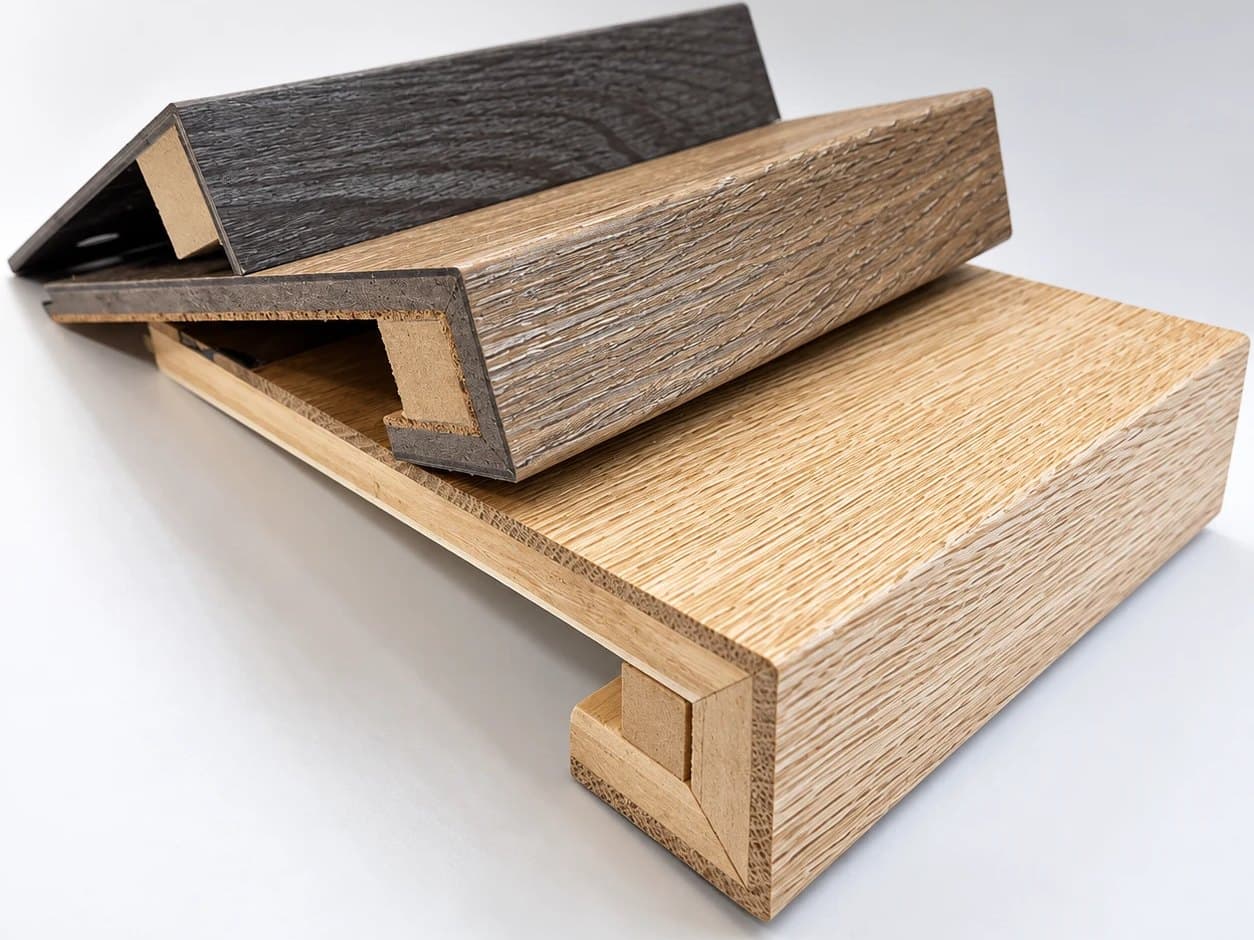
The nosing is the front edge of each step. Your foot lands on it first, it wears fastest, and everyone sees it on the way up. It has to be solid, and because it's so visible, it has to match.
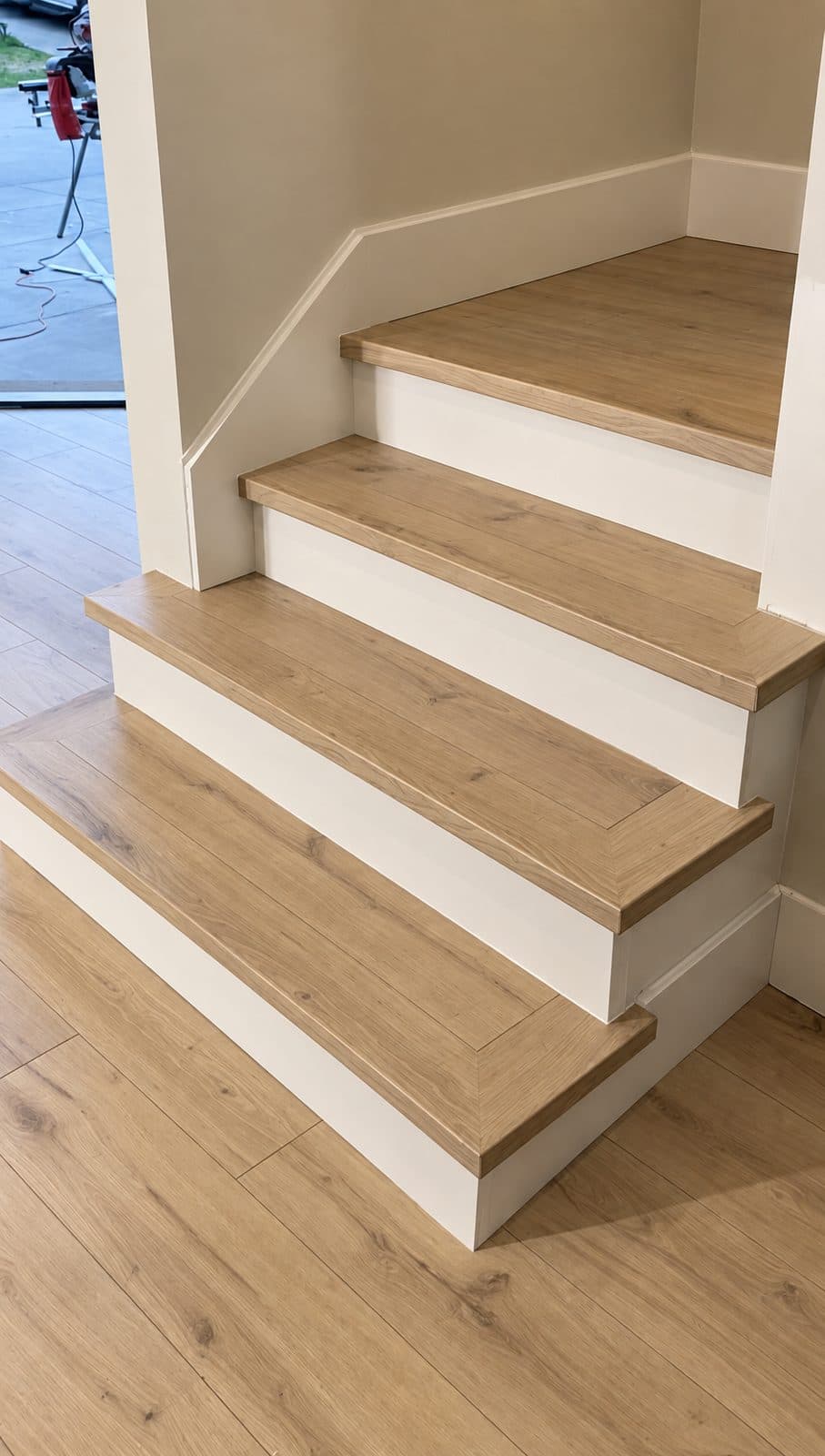
Most laminate and vinyl plank is sold with a matching stair-nose trim. It is usually a rounded piece that sits on the step as a separate part, often in a colour or sheen that's close but not exact. Some floors have no matching piece at all. A custom square nosing is made to match your floor, with a square edge that gives the stairs the same straight, clean lines as the floor they meet.
Getting the colour right starts with the order. Laminate and vinyl are made in batches, and two batches of the same product can look slightly different. Ordering the stair material with the floor means it all comes from the same batch.
Risers are the upright boards between the steps. They can be covered in the same flooring for one continuous look, or finished in a different colour. Both work. Ask at the measure which one suits your house.
Safety and grip on a hard staircase
Your foot learns the height of the first couple of steps and expects the rest to match. A step that's even slightly taller or shorter than the others is the one people catch a toe on.
New treads raise every step by the same amount, so the steps in the middle stay even. The first and last steps still change unless the floors at the bottom and top of the stairs change by about the same amount. That's why stairs are planned together with the floors they meet, not added at the end.
A loose edge on a staircase is more dangerous than a loose board on a floor. That's why nosings are fixed down firmly, not just set in place.
Hard stairs have less grip than carpet, especially in socks. A textured, matte surface grips noticeably better than a smooth, glossy one. If you're still choosing your floor, keep that in mind, because the stairs will be the same material.
When the nosing matches the tread exactly, the edge of each step is harder to see on the way down in dim light. Good lighting on the stairs matters more with matching hard stairs than it did with carpet.
FAQ
Custom Stairs: common questions
Something we haven't covered? Ask — the person who answers is the one who does the work.
Can laminate or vinyl plank go on stairs?
Yes, but it is fitted differently from a floor. On a floor it floats. On stairs, every tread is cut to fit, glued and fastened so nothing moves underfoot. The front edge of each step takes most of the wear, so a hard-wearing surface matters here. The 12mm AC4 waterproof laminate we supply is rated for heavy home use.
Will the stairs match my floor exactly?
If the stairs and floor are done together from the same order, the treads and risers are the same product as the floor, and the nosings are made to match it. Matching a floor that went in years ago is harder, because products get discontinued and colours vary between batches. If an exact match isn't possible, we'll tell you at the measure, before you've spent anything.
Are hard stairs more slippery than carpet?
Yes, somewhat, especially in socks. A textured surface, firmly fixed nosings, even step heights and good lighting all lower the risk, but a hard staircase will never grip like carpet. If anyone in the house is unsteady on stairs, or you have an older dog, think about that before you decide.
What if my stairs turn a corner or have a curved bottom step?
Wedge-shaped steps at a turn, open sides and landings are all common, and each piece is cut to fit its own step. A curved bottom step is the hardest part of any staircase to cover in plank flooring. Danny will look at yours at the free measure and explain what's possible before you commit to anything.
Do I need new flooring at the top and bottom of the stairs too?
Not always, but it's worth planning them together. Covering the treads makes the bottom step taller and the top step shorter than the rest, unless the floors there come up by a similar amount. When the stairs are done with the floor, those two steps can be kept even with the others. If only the stairs are being done, the change gets measured at the free measure, and you'll hear plainly whether it's enough to matter.
Goes well with
Related services & materials
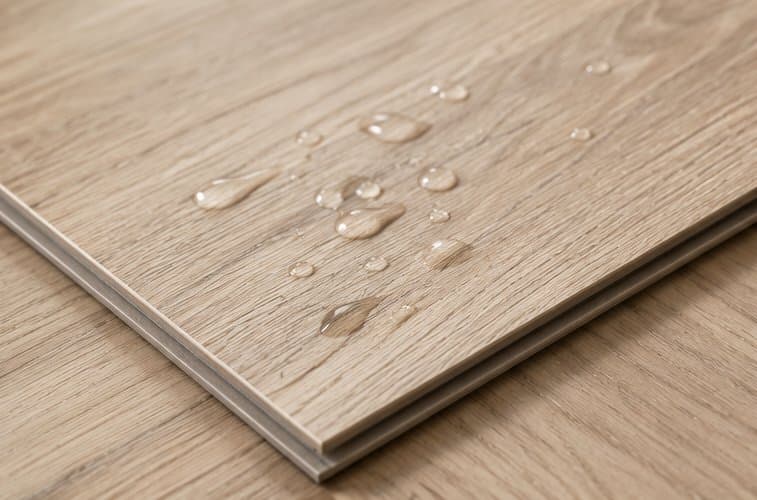
Waterproof Laminate
12mm AC4 laminate that resists scratches and handles everyday spills, supplied, delivered and installed, with samples available before you choose.
Learn more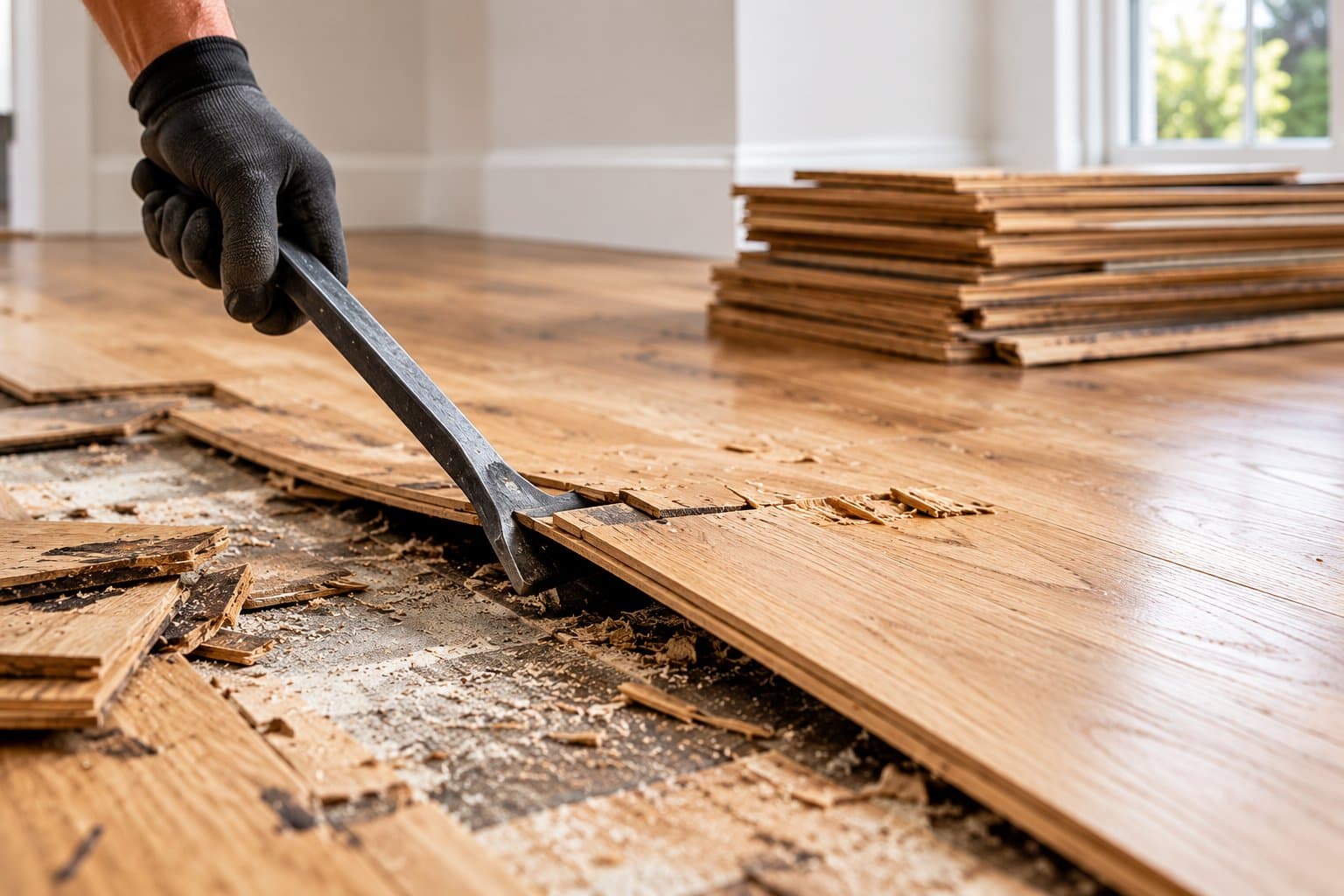
Floor Removal & Disposal
Old carpet, laminate, vinyl and tile taken up and hauled away, with the bare subfloor checked and pre-1990 vinyl and adhesive tested for asbestos before it's disturbed.
Learn more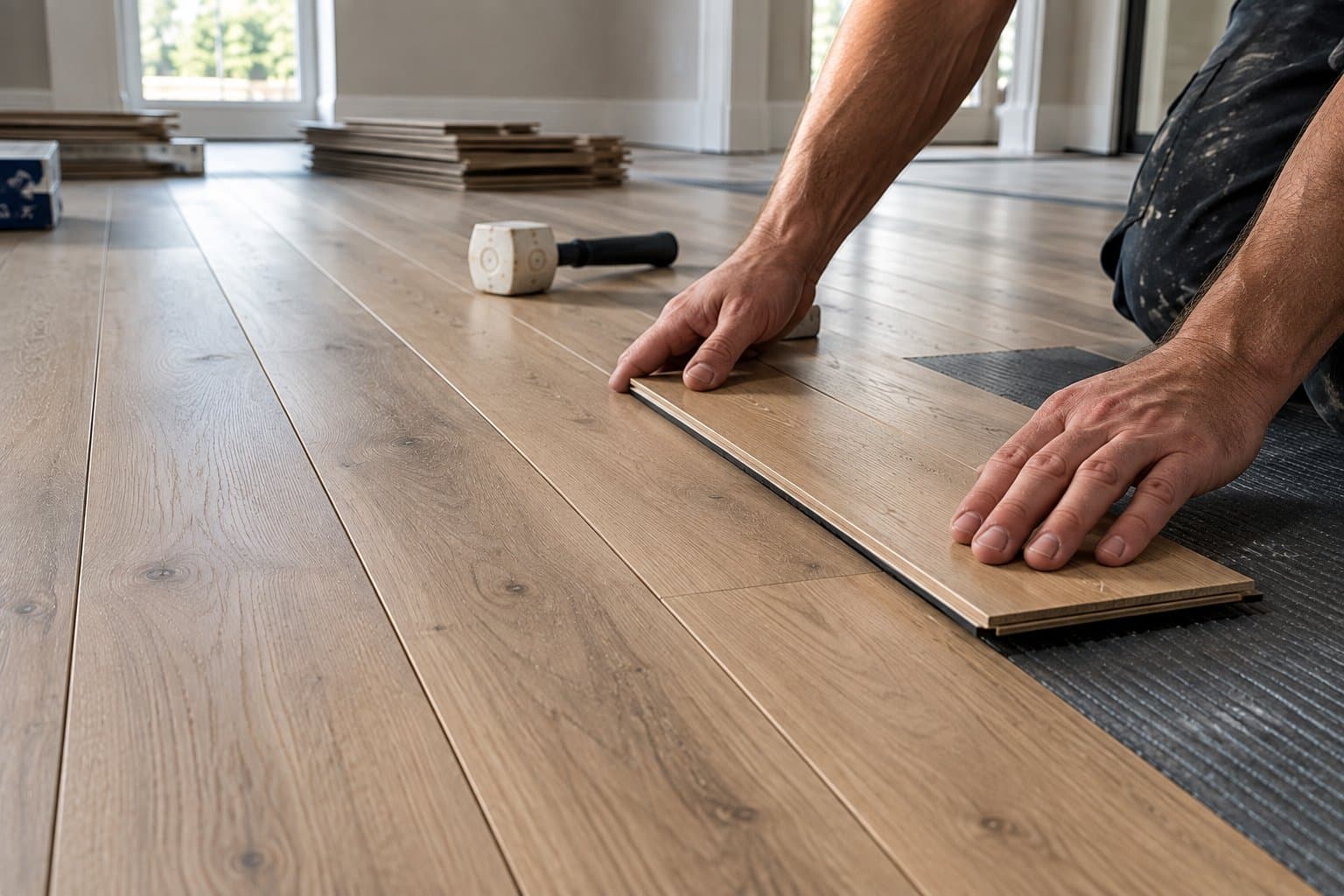
Flooring Installation
We install waterproof laminate, vinyl plank, engineered and solid hardwood, and luxury vinyl tile over a checked subfloor, with the gaps, underlay and transitions each product needs.
Learn more
Free Estimate
Let's talk about your floor.
Call (604) 787-5557 or request a Free Estimate online. The on-site measure is free, there's no obligation, and you'll usually hear back the same day.