
Service
Old Floor Removal & Disposal in Maple Ridge
Before a new floor goes down, the old one has to come up completely. That means more than the flooring you can see. Staples, tack strip, glue, felt backing and tile mortar left stuck to the subfloor all have to go too, because anything left behind shows through the new floor as a bump or a ridge. It is also the one day you get to see the subfloor itself and deal with what's there, before it's covered up again for years.
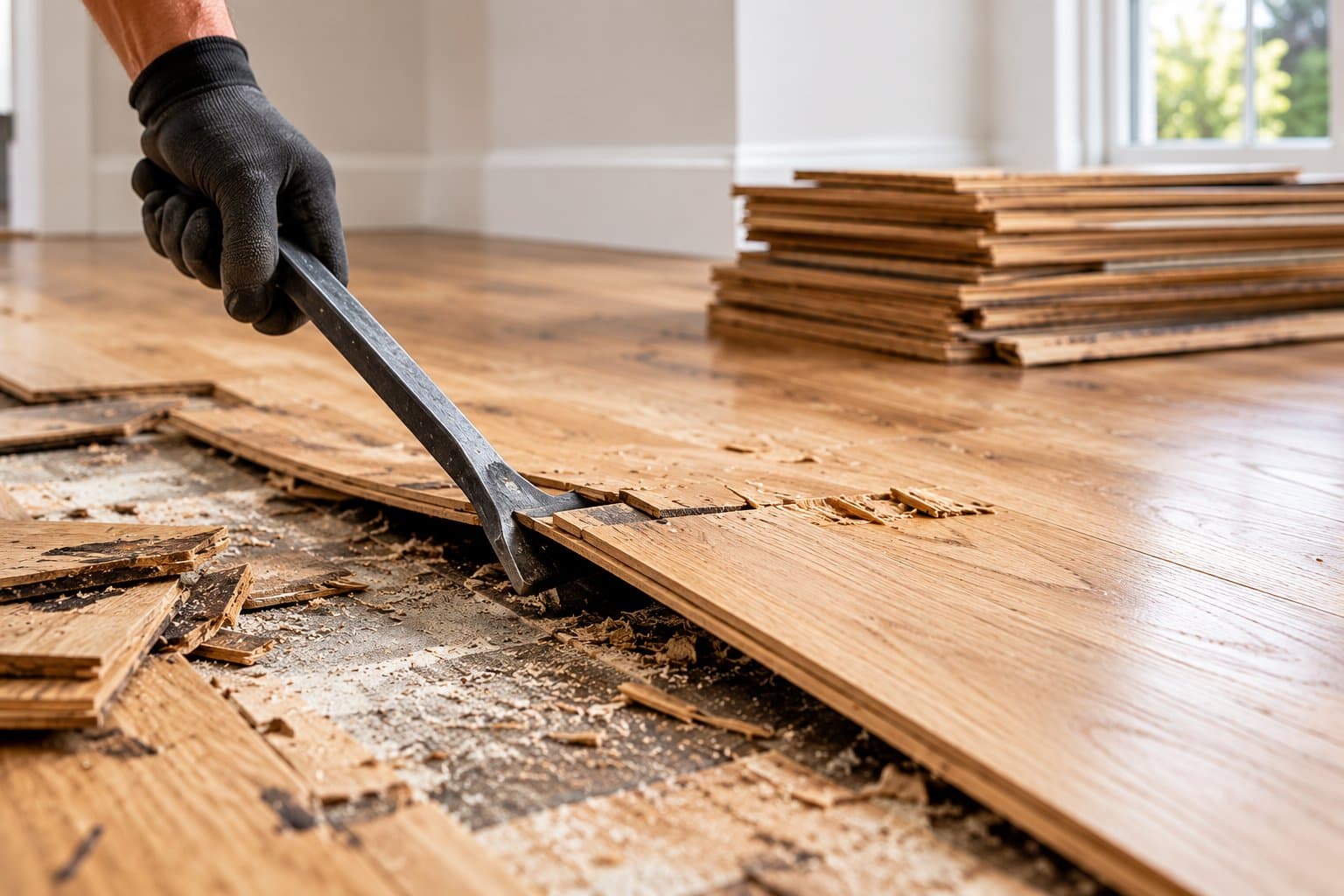
WoodPro takes up old carpet and underpad, laminate, vinyl plank, sheet vinyl and tile before your new floor goes in, works to keep the dust in the room it comes from, and takes the old material away. In homes built before 1990, old vinyl and the adhesive under it are tested for asbestos before anyone scrapes or cuts into them. BC's workplace safety rules require that check before workers disturb materials like these, and it protects your household as much as the person doing the work.
Why it matters
You see the subfloor before it's covered
Rot, old leaks and loose subfloor are far easier to fix while the floor is open than after a new one is on top. Removal is the one chance to look.
Dust kept to the work area
The work area is closed off and cleaned as the work goes, so the rest of the house stays usable. We're straight about the limits: tile removal is never dust-free.
Tested before it's touched
In homes built before 1990, old sheet vinyl, vinyl tile and flooring adhesive are tested for asbestos before removal, as BC's workplace safety rules require. Nobody scrapes first and asks later.
Hauled away, not left behind
The old flooring leaves with the job. No roll of old carpet sitting in your garage and no dump run for you to make.
The honest version
Pros and cons
Pros
- Exposes rot, old leaks, loose subfloor and squeaks while they are still easy to fix
- Keeps the floor height down, so doors, the dishwasher opening and the top stair nosing still line up with the new floor
- Gives the new floor the flat, solid base its installation instructions call for
- Gets rid of old underpad and adhesive that can hold pet odours and years of spills
Cons
- It adds time to the job, and usually cost, compared with going over the old floor where that is possible
- Even with the work area closed off there is noise and some dust, especially with tile
- It can uncover problems that add work you weren't planning for
- In pre-1990 homes, asbestos testing adds a few days of lead time, and a positive result means either bringing in a licensed abatement contractor or leaving that layer undisturbed under the new floor
What comes up, and what it leaves behind
Old floors don't all come up the same way. The real difference is in what stays stuck to the subfloor afterwards, because all of it has to go before the new floor can sit flat.
Baseboards usually come off first, so the old floor can come out cleanly at the walls and the new one can tuck underneath. If they're going back on, they need to come off without splitting. If they're dated or damaged, this is the easiest time to replace them.
Carpet is the quickest. The carpet and underpad roll up, but the tack strip around the edges and the staples holding the pad have to come out too. A staple left behind can show through a thin vinyl plank.
Floating laminate and click vinyl plank come apart in whole boards, along with the foam underlay. The catch is anything installed after the floor went down, such as a kitchen island or built-in cabinets sitting on top of it. Those edges have to be cut free cleanly, which is worth knowing before the day.
Glue-down vinyl and sheet vinyl are slower. The flooring itself may pull up easily; the adhesive, and the felt backing that tears off and stays stuck to the floor, are what take the time, because the surface has to be scraped back smooth.
Tile is the heaviest and dustiest removal in a house. The tile breaks up easily enough, but the mortar under it is bonded to the floor and has to be chipped or ground off. Closing off the room and cleaning as the work goes contains most of the dust. Nothing gets rid of all of it, and anyone promising dust-free tile removal is overselling. In an older house, some of the adhesives used under old tile can contain asbestos too, so they fall under the same test-first rule as old vinyl.
Old vinyl and adhesive: why it gets tested first
Sheet vinyl, vinyl floor tiles and the adhesives used under old floors could be made with asbestos until about 1990. You can't tell by looking. Sheet vinyl with a grey or white felt backing and old 9-inch square vinyl tiles are the classic suspects, but larger tiles and the black or brown glue under many old floors can contain it too. A newer-looking floor can also be sitting on an older layer underneath.
Left alone and intact, it is low risk. The danger comes from disturbing it, and removal is exactly that: scraping, tearing and grinding are what release fibres into the air of your house.
That is why BC's workplace safety rules require a qualified person to identify asbestos-containing materials before renovation work that could disturb them. For old flooring, that normally means samples sent to a lab; anything that isn't tested has to be treated as if it contains asbestos. In a pre-1990 home with old vinyl or adhesive, testing happens before removal starts, not after the first scrape. Results often come back within a few business days, so it is worth sorting out when you book rather than on the morning of the job.
If a sample comes back positive, that layer has to be removed by a licensed asbestos abatement contractor, not a flooring installer. Sometimes the better answer is not to remove it at all: if the old vinyl is flat and firmly stuck down, a floating floor can often go over it and leave it undisturbed. We'll talk through which makes sense for your room.
What turns up underneath, and what happens next
Taking up the old floor is the first real look anyone gets at the subfloor, and it is common to find something. Soft or water-stained subfloor around toilets, dishwashers, fridges with a water line and exterior doors. Particleboard underlay that swelled from an old leak and never went back down. Dips and humps a thick carpet was hiding. Squeaks where the subfloor has worked loose from the joists. In basements, cracks in the slab or a slab that is damp.
None of it gets covered over. When something turns up, work on that area stops and you get photos and a plain explanation of what it is, what fixing it involves and what it will cost, before anything else happens. You decide with the facts in front of you, not from a surprise on the final invoice.
Most of what turns up is a straightforward fix while the floor is open: fastening the subfloor down to stop a squeak, replacing a damaged section, or floor levelling to fill the low spots so the new floor sits flat. Doing it now takes a fraction of the effort it would once a new floor is on top.
FAQ
Removal: common questions
Something we haven't covered? Ask — the person who answers is the one who does the work.
Can the new floor just go over the old one?
Sometimes. A floating laminate or vinyl plank floor can often go over old sheet vinyl or tile that is flat, dry and firmly stuck down, which avoids removal altogether. Deep grout lines in old tile may need filling first so they don't show through. It can't go over carpet, cushioned vinyl, anything loose or hollow-sounding, or another floating floor. Stacking floors also raises the height at every doorway, the dishwasher and the top step, so it gets checked at the free on-site measure rather than assumed.
Can I pull up old vinyl or tile myself before you arrive?
Click laminate and vinyl plank are the easy ones: they come apart board by board, and it's worth asking at the quote how doing it yourself would change things. Glued vinyl and tile are different jobs. In a house built before 1990, leave old sheet vinyl, vinyl tile and any old adhesive alone until it has been tested for asbestos. And tile with mortar under it is heavier, dustier work than most people expect, with a subfloor that still has to end up smooth.
My house was built in the 1970s. Do I need an asbestos test before the floor comes up?
If the old vinyl or the adhesive under the floor could date from before 1990, yes. It isn't a hazard sitting undisturbed; removal is what disturbs it. Lab results often take a few business days, so it's best arranged when you book. If a sample is positive, a licensed abatement contractor removes that layer, or the new floor may be able to float over it without disturbing it.
How long does removal take?
It depends far more on what's coming up than on the size of the room. Carpet and click floors come up quickly. Glued-down vinyl and tile take much longer for the same area, because the adhesive or mortar has to come off before the subfloor is ready. You'll get a realistic time at the measure, once the floor has actually been seen.
What happens if you find damage under my old floor?
Nothing extra gets done without your yes. You see what was found first, with photos and the cost of fixing it. Most fixes, like fastening loose subfloor or replacing a soft section, fit into the same job while the floor is open. The one that can change the plan is a damp basement slab, because it decides which floors can safely go down on it.
Goes well with
Related services
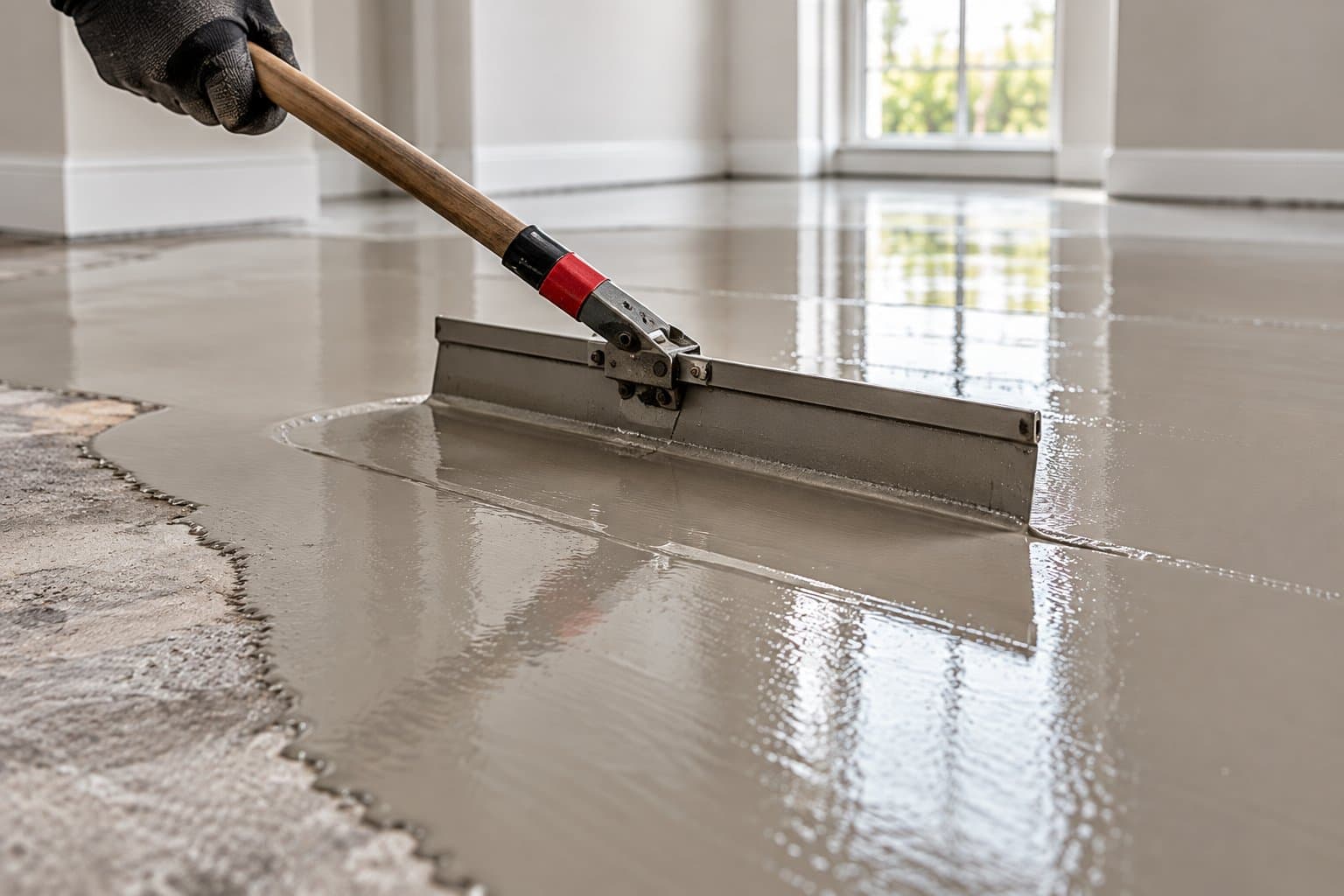
Floor Levelling
High spots ground down and low spots filled before the new floor goes in, so the planks sit flat instead of flexing at the seams with every step.
Learn more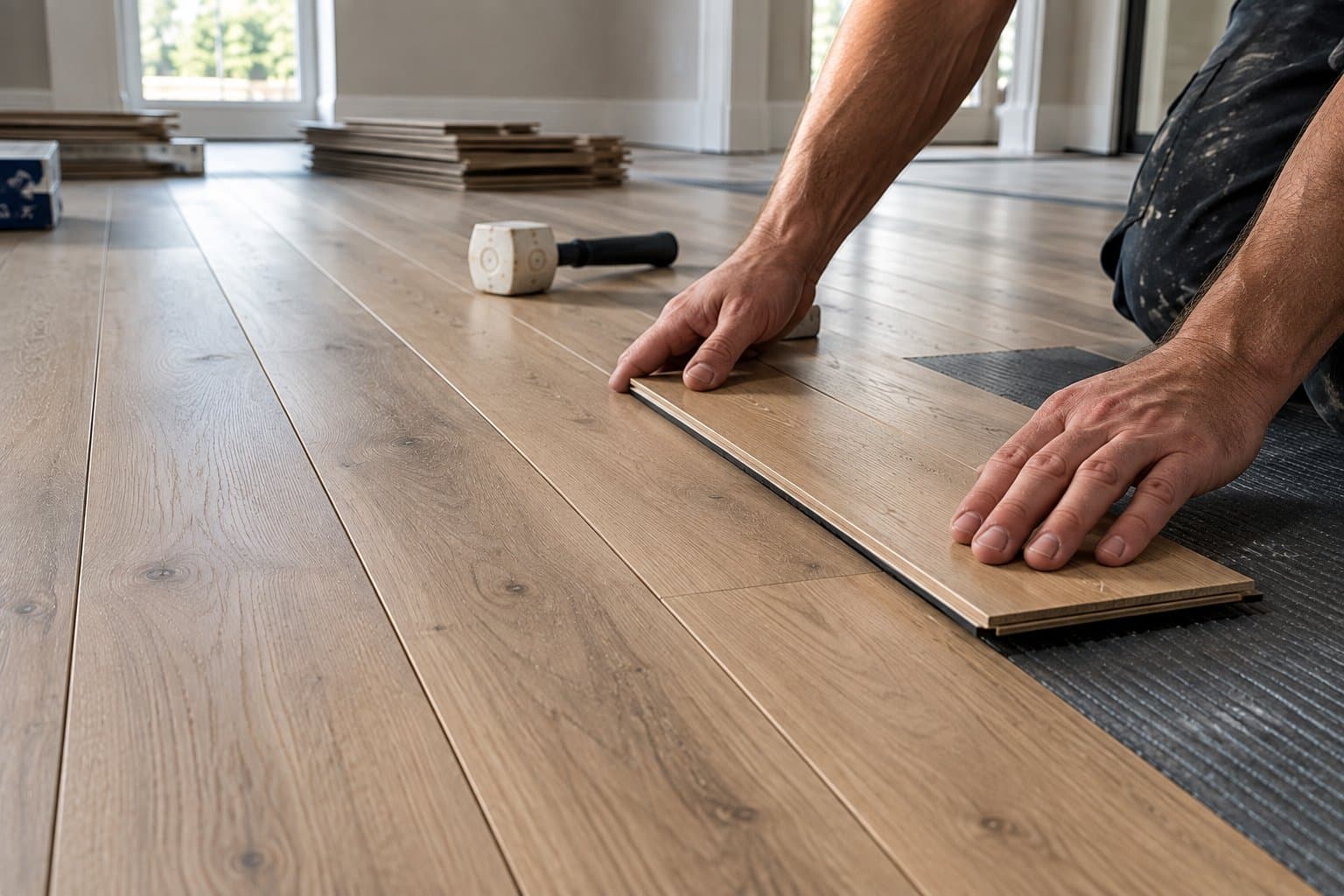
Flooring Installation
We install waterproof laminate, vinyl plank, engineered and solid hardwood, and luxury vinyl tile over a checked subfloor, with the gaps, underlay and transitions each product needs.
Learn more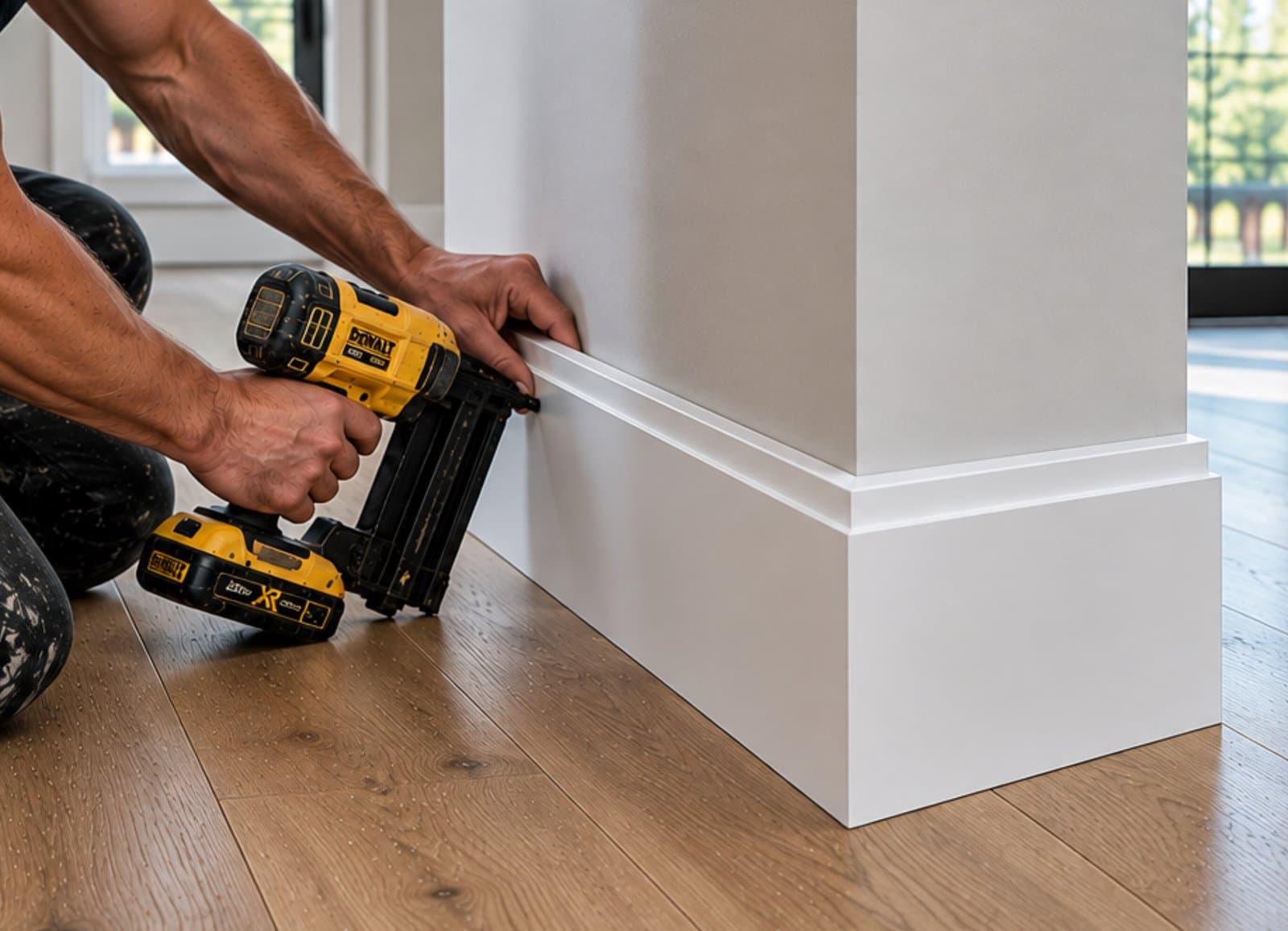
Baseboard & Trim Installation
New baseboards, shoe moulding, or your existing trim put back after the new floor goes in, with the expansion gap covered and everything left ready for paint.
Learn more
Free Estimate
Let's talk about your floor.
Call (604) 787-5557 or request a Free Estimate online. The on-site measure is free, there's no obligation, and you'll usually hear back the same day.