Service
Carpet Installation for Bedrooms, Stairs & Basements
Carpet has gone out of fashion in living rooms, but it's still the right floor for a lot of bedrooms, staircases and basement rec rooms. It's warm, it's quiet, and on a staircase it gives you more grip and a softer landing than any hard floor.
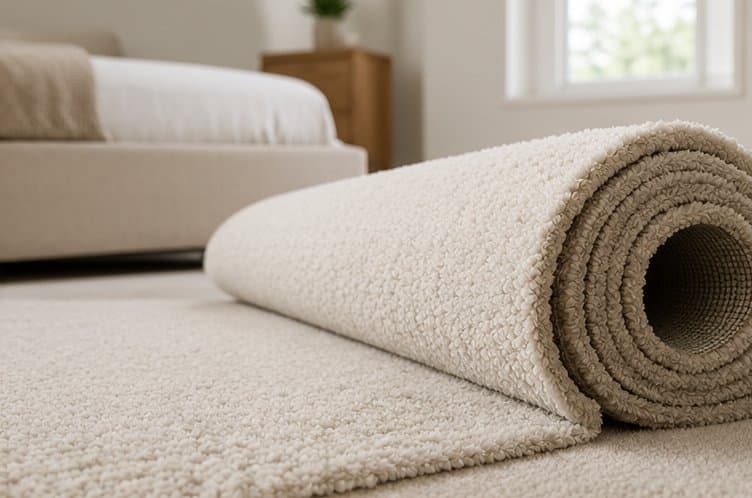
Three things decide whether a carpet still looks good five years from now: the fibre, the underlay beneath it, and how tightly it was stretched when it went in. It's easy to choose on colour and softness alone, because those are what you can see and feel in a sample. WoodPro Flooring installs carpet across Maple Ridge, Pitt Meadows and the Lower Mainland. This page explains all three, so you can judge a carpet, and a quote, for yourself.
Why it matters
Stretched to stay flat
Each room is pulled tight with a power stretcher before the carpet is hooked onto the tack strip. That tension is what keeps it from relaxing into ripples a few years later.
Underlay matched to the carpet
The pad is chosen for the carpet style and the room, not by thickness alone. Stairs get a firm pad so the edge of each step stays solid underfoot.
Seams planned before the first cut
Most carpet comes in rolls about 12 feet (3.66 m) wide, so bigger rooms need a seam. It's planned out of the main walkways and, where the room allows, running toward the main window, where it's hardest to see.
Finished edges at every doorway
Where carpet meets a hard floor, the edge is secured and finished with a transition so it doesn't fray, lift or catch a toe.
The honest version
Pros and cons
Pros
- Warm and soft underfoot, which is why it suits bedrooms and cool basement rooms
- Quiet: it soaks up footsteps and cuts the noise that travels between floors
- Safer on stairs, with better grip and a softer landing if someone slips
- More forgiving of small bumps and dips in the subfloor than click-together hard floors
Cons
- Spills and pet accidents can soak through to the underlay, and odours are hard to get out
- Not for wet areas. A basement that floods usually means replacing both the carpet and the underlay
- Shows wear in busy walkways and generally doesn't last as long as a hard floor
- Needs regular vacuuming to keep dust and allergens under control
Nylon, polyester or wool: pick the fibre for the room
Nylon is the most resilient of the common synthetic fibres. When you walk on it, it springs back, and that's what stops a hallway or staircase from wearing a flat, shiny path down the middle. It's the fibre for stairs, halls and busy family rooms. How well it resists stains depends on how it was made and treated. Solution-dyed nylon, where the colour goes in before the fibre is spun, handles spills and sun fading best.
Polyester is soft, takes colour well, and shrugs off most water-based spills like juice. It usually costs less than nylon. The trade-off is that it flattens faster under foot traffic, and oily stains grip it. In a guest room or a bedroom that mostly sees socks, that's a fair trade. On a staircase it isn't. You may also see triexta, a fibre in the polyester family that sits between the two for softness and durability.
Wool is the natural option. It's resilient, it hides everyday soil well, and it's naturally slow to burn. It costs more than either synthetic, can be fussy about some cleaning products, and doesn't like damp, so it suits an upstairs bedroom better than a basement.
Whatever the fibre, density matters more than pile height. Bend a sample back on itself. If you can see a lot of backing between the tufts, it will crush sooner than a shorter, tighter carpet.
Underlay and power-stretching: the parts you never see
Underlay isn't only there for comfort. It takes much of the pounding that would otherwise break down the carpet's backing. A thin, cheap pad lets a good carpet wear out from underneath.
Thicker isn't automatically better, though. Carpet makers usually set a maximum thickness and a minimum firmness for the pad under their product, and loop-style carpets generally need something thinner and firmer than a plush cut pile. On stairs, a thick, soft pad makes the front edge of each step feel mushy underfoot, which is the last thing you want where people trip. The goal is the right underlay for that carpet in that room, not the thickest roll available.
Then there's the stretch. Around the edges of the room, carpet is held by tack strip: thin wood strips with angled pins that grip the backing. To stay flat, the carpet has to be pulled tight across the whole room before it's hooked on. A power stretcher does this by bracing against the far wall and pulling with steady, even tension.
The shortcut is to do the whole room with a knee kicker, a small tool you bump with your knee. It's the right tool for closets, stair treads and hooking edges, but it can't put enough tension across a bedroom. Carpet laid that way tends to relax into ripples within a few years, and the ripples wear faster because each raised ridge takes the scuffing. You can't vacuum them out. The fix is a re-stretch, which means emptying the room again.
Bedrooms, stairs and basements: what changes room to room
Bedrooms are the easy case. Traffic is light, so a softer carpet does fine, and polyester or a soft nylon both work. The main decisions are colour, feel and an underlay that suits the carpet.
Stairs take more wear than any other carpet in the house. Every step gets hit in the same spot, and the front edge (the nose) gets bent and scuffed on every trip. That's where you want nylon and a firm pad. There are two common ways to carpet a stair. A waterfall install runs the carpet over the nose and straight down to the next step. A capped, or Hollywood, install wraps the carpet tightly around the nose and tucks it underneath, which looks more tailored and takes longer to fit. Either way, the pile should run down the stairs so every step wears and looks the same.
Basements need one check first. Concrete slabs give off moisture from the ground, and carpet over a damp slab can turn musty or grow mould underneath where nobody sees it. A simple test: tape a square of clear plastic, roughly 45 cm across, to the bare concrete, seal all four edges, and look under it after a day. Fog on the underside of the plastic, or a darker patch of concrete, means moisture is coming through. It's a rough check, not a measurement: a dry result on one day doesn't rule out damp in a wetter season.
A dry slab can take carpet with a suitable underlay. Some pads have a thin film on top that stops spills and pet accidents soaking into the pad, but no underlay fixes a damp floor. If the basement has ever had water on the floor, choose something that survives getting wet. Luxury vinyl plank is waterproof and a better fit for that room.
FAQ
Carpet: common questions
Something we haven't covered? Ask — the person who answers is the one who does the work.
Which carpet holds up best with pets?
A cut-pile nylon. Avoid loop carpets, often sold as Berber. Claws catch in the loops, and one pulled loop can run a line across the room. For accidents, an underlay with a moisture-barrier film on top stops urine soaking into the pad, which is where the smell stays.
My carpet has ripples. Does it need replacing?
Usually not. Ripples mean the carpet has lost tension, most often because it wasn't power-stretched to begin with, or because heavy furniture was dragged across it. If the carpet itself is in decent shape, it can normally be re-stretched and the extra trimmed off. Replacement makes sense when it's also worn through or badly stained.
Can I take the old carpet out myself?
Yes, it's one of the easier jobs to do yourself. Cut the carpet into strips about a metre wide so it rolls up manageably, then lift the underlay and pull the staples that held it, which is the slow part. Wear gloves, because the tack strip around the edges has sharp pins. Leave the tack strip in place until it's been checked, since strip in good condition can often be reused. Just mention it when we measure, so the quote matches what's left to do.
Should I keep carpet on the stairs if the floors around them are going hard?
It's a common and sensible mix. Stair carpet is quieter and grippier, and keeping it avoids rebuilding the stairs. The detail that matters is the top of the flight, where the new hard floor on the landing meets the carpet going down. That edge needs a proper nosing or transition so it's solid underfoot and doesn't fray. If you'd rather the stairs match the new floor, hard treads with nosings made to match are the other option, and the measure is a good time to compare the two.
Is carpet bad for allergies?
The evidence is more mixed than people assume. Carpet can hold dust and allergens down instead of letting them float around, but walking and vacuuming stir some back up, and it only helps if it's vacuumed often with a good vacuum, ideally one with a HEPA filter. If regular vacuuming isn't going to happen, a hard floor is the better choice for someone with allergies.
Goes well with
Related services & materials
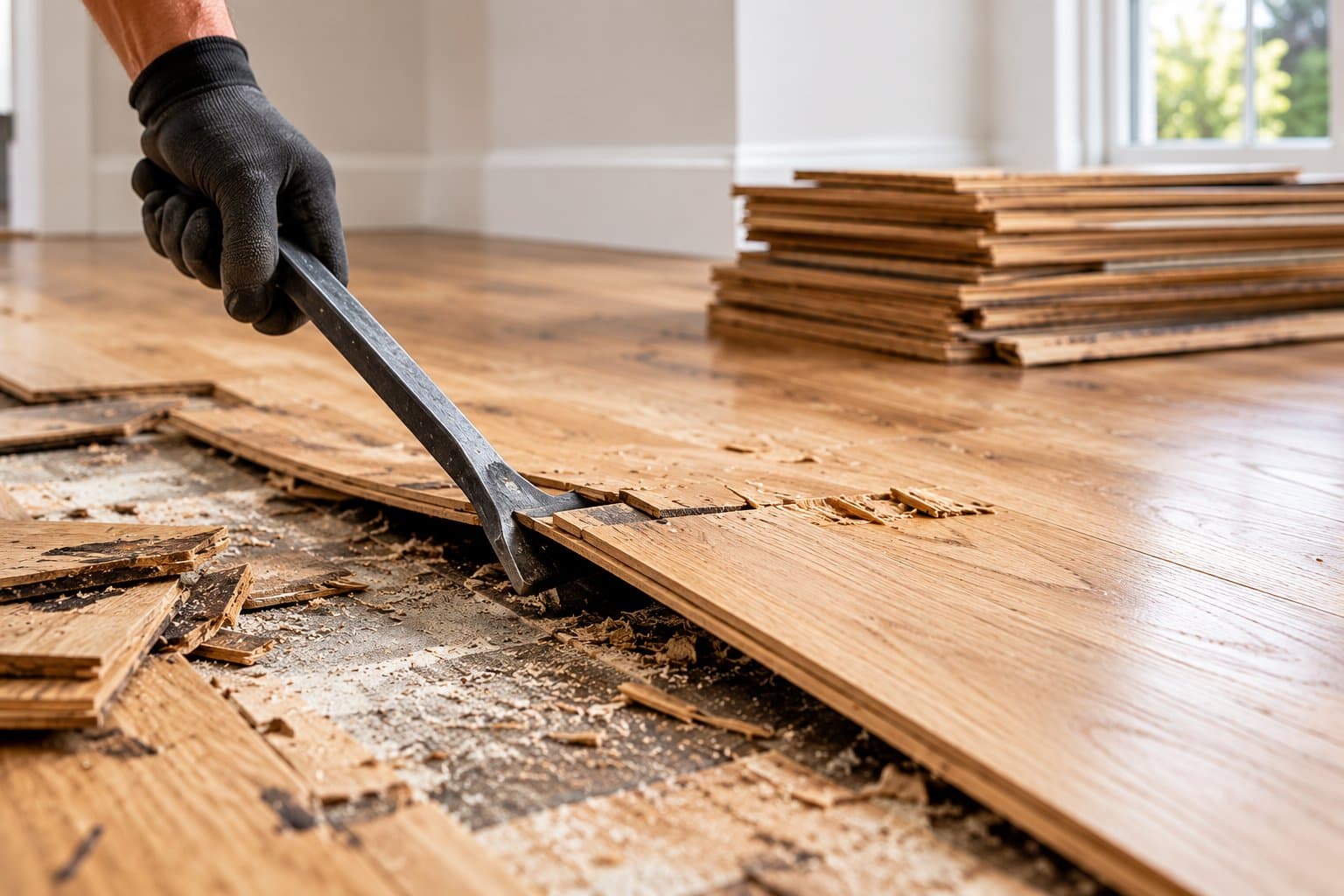
Floor Removal & Disposal
Old carpet, laminate, vinyl and tile taken up and hauled away, with the bare subfloor checked and pre-1990 vinyl and adhesive tested for asbestos before it's disturbed.
Learn more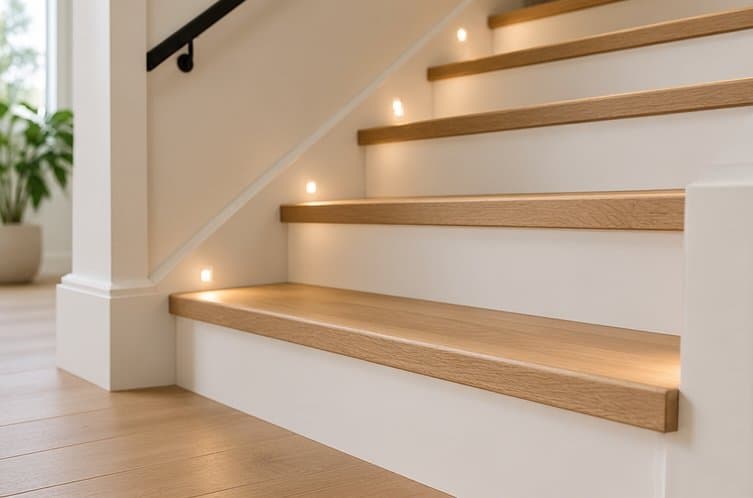
Custom Stair Installation
The carpet comes off and treads, risers and custom square nosings go on, matched to your new floor and planned for safe footing.
Learn more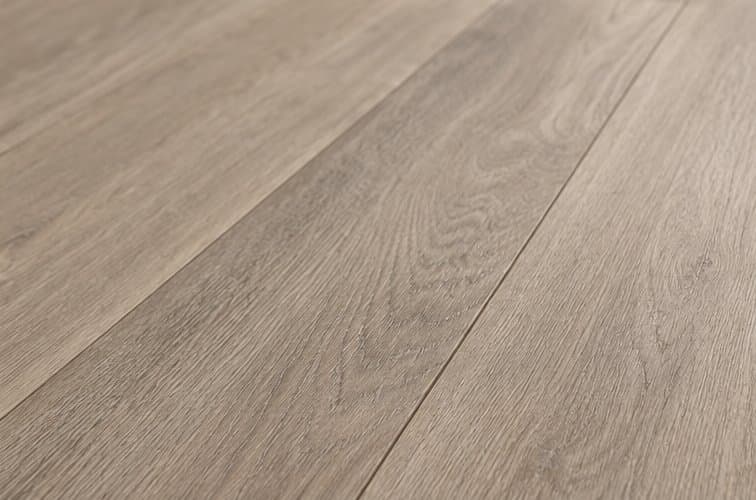
Luxury Vinyl Plank
A plank that water won't swell, for basements, kitchens and homes with pets, as long as the floor underneath is flat.
Learn more
Free Estimate
Let's talk about your floor.
Call (604) 787-5557 or request a Free Estimate online. The on-site measure is free, there's no obligation, and you'll usually hear back the same day.