Material
Solid Hardwood Flooring
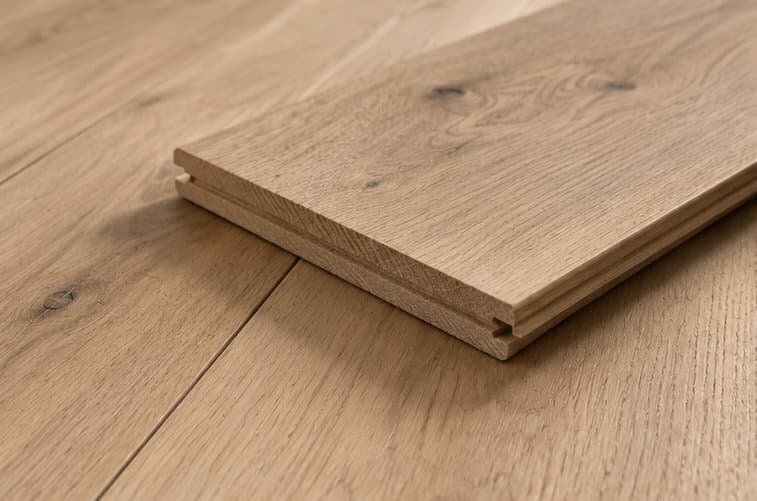
Solid hardwood is the traditional wood floor. Each board is one piece of wood, usually 3/4 inch thick, milled with a tongue on one edge and a groove on the other so the boards lock together as they're nailed down. The wood you see on top goes all the way through, and that's what lets a solid floor be sanded back to bare wood and refinished several times over its life. Plenty of older Lower Mainland homes still have their original fir or oak floors under the carpet.
WoodPro Flooring installs solid hardwood in homes across Maple Ridge, Pitt Meadows and the Lower Mainland. It has limits, though, and they're mostly about moisture. Solid wood swells and shrinks with the seasons more than engineered flooring does. It's nailed to a wood subfloor, it doesn't belong below grade or in a bathroom, and it's generally kept off concrete slabs. This page covers the species and the finish, where solid suits and where engineered is the better call, and why the gaps between boards change through the year.
Why homeowners choose it
Wood all the way through
Every board is one piece of real wood, with no core, no veneer and no printed image. It looks, feels and sounds like wood because every part of it is wood.
Can be sanded and refinished several times
Scratches, worn traffic paths and a tired finish can be sanded off to bare wood and a new finish put on. A solid board has enough wood above the tongue for that to be done several times over the life of the floor.
Firm underfoot
Because it's nailed to the subfloor rather than floating on underlay, a solid floor feels firm when you walk on it and doesn't have the slightly hollow sound a floating floor can have.
A choice of wood and finish
Oak, maple, hickory, walnut and more, each with its own colour, grain and hardness. Boards come finished from the factory, or unfinished to be sanded and finished in place, where stain samples can be tried on the boards themselves.
The honest version
Pros and cons
Pros
- Real wood through the whole board, with no core, veneer or printed layer
- Can be sanded and refinished several times, so scratches and worn paths don't have to be permanent
- Nailed down, so it feels firm and doesn't sound hollow the way a floating floor can
- A damaged board can be cut out and a new one fitted in its place without redoing the room, though a new board can look different from boards that have aged for years
- A wide choice of species, and unfinished boards can be stained on site, with the stain tried on a few of your own boards before the whole floor is done
Cons
- Water is its weak point. Standing water, a slow leak or a wet mat left down will stain the wood and swell the boards, so it's the wrong floor for bathrooms and laundry rooms.
- It needs a wood subfloor above grade. It generally isn't used on concrete slabs, in basements or over in-floor heating, and engineered flooring is the usual answer in all three.
- It moves more with the seasons than engineered. Thin gaps open in winter when the heat is on and close again once the heating is off in spring and summer, and a damp crawlspace underneath can make the boards cup.
- Real wood dents and scratches, and it usually costs more than laminate or vinyl plank. Softer species such as walnut and fir mark more easily than oak, and the finish scratches before the wood does.
Choosing the wood: species, hardness and the finish
Oak is the everyday hardwood floor, in red oak and white oak. Its open grain takes stain evenly and hides day-to-day wear well. Maple is paler and harder, with a tight grain that can take stain unevenly, which is why maple floors are often left natural. Hickory is harder again, with strong colour changes from one board to the next. Walnut is a rich dark brown and noticeably softer than oak, so it dents more easily. No species is dent-proof, and the finish on top scratches before the wood underneath does.
Many older houses around the Lower Mainland, especially those built before the middle of the last century, have Douglas fir floors, often found under old carpet or lino. Fir is a softwood, laid and finished like a hardwood floor but much softer than oak. An old fir floor usually carries decades of small dents, and a new one will pick them up too. Plenty of people like that look, but it's worth knowing before you choose it for a busy room.
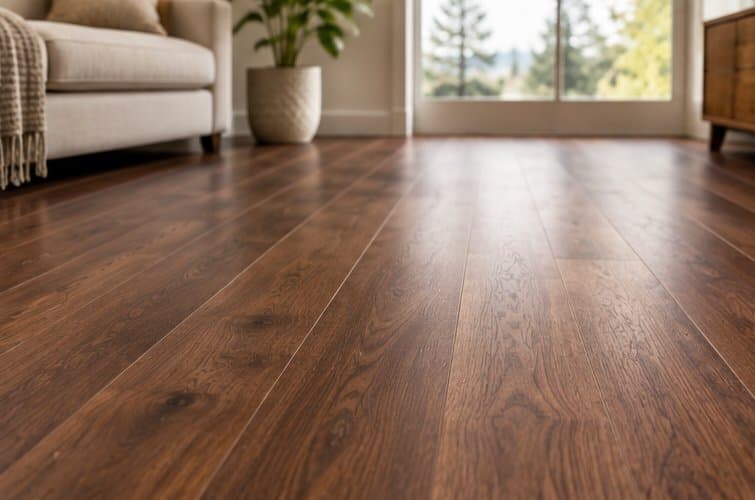
Prefinished boards are sanded, stained and coated at the factory with a hard, factory-cured finish. They go down with no sanding and no finish fumes in the house, and the rooms can be used soon after. Most have a small bevel along each edge, which hides slight height differences between boards but also leaves small grooves where dirt collects. They can be sanded later like any solid floor, though the factory finish takes more work to cut through and the bevels only disappear if enough wood comes off.
Site-finished floors go down as raw wood, then get sanded flat, stained if you want colour, and coated in place. The finish runs across the seams in one continuous film, the edges are square and the surface is flat, and stain samples can be tried on your own boards first. Getting close to an older floor's colour is often possible, but an exact match to wood that has aged for decades isn't something anyone can promise. The trade-off is time, dust and smell, with the rooms out of use while each coat dries. Dry isn't the same as cured. A finish can take careful foot traffic once it's dry but keeps hardening for days or weeks after, which is why rugs and heavy furniture wait longer. Ask which finish will be used, how many coats, and how long before furniture and rugs can go back.
Where solid hardwood goes, and where engineered is the better choice
Solid hardwood is nailed down. A flooring nailer drives cleats or staples at an angle through the tongue of each board into the subfloor, where the next board's groove hides them. That needs a plywood, OSB or older plank subfloor thick and stiff enough to hold the fasteners, usually with a layer of building paper or felt on top. The boards generally run across the floor joists, and over an old plank subfloor the direction of those planks matters too, sometimes enough to call for a layer of plywood first. Nailing is a little more forgiving of small dips than a floating floor, but a hump or hollow can still squeak underfoot, so the subfloor is checked and fixed first. A gap is left at every wall so the floor can expand, and the baseboards cover it.
Solid wood takes on moisture from whatever it sits on, so it's generally kept above grade. Over a slab poured on the ground or in a basement, moisture coming up from the ground gets into the boards and they cup, and there's no wood subfloor to nail into without building one first. Many solid hardwood makers also don't approve their boards over in-floor heating, because the heat dries them out and opens wide gaps. In all three places, engineered flooring is the usual answer. It's real wood on top of a cross-laid core that moves far less, and it can float or be glued down instead of nailed.
Bathrooms and laundry rooms are the other places solid hardwood doesn't suit. Splashes around a tub, a toilet tank that sweats in humid weather and the odd washer overflow all find the seams. Luxury vinyl plank or vinyl tile is the better floor there. Kitchens are a judgement call. Many older homes have hardwood in the kitchen and it does fine, as long as spills get wiped up and a leak under the sink or dishwasher is caught early.
Moisture, the seasons and a floor that moves
Wood takes on and gives off moisture with the air around it. It gets slightly wider when the air is damp and slightly narrower when it's dry, and wide boards move more than narrow ones. So the boards shouldn't go down straight off the truck. They sit in the rooms they're going into, with the heat on and any drywall, paint or concrete work dry, until they're close to the moisture level they'll live at. That isn't a set number of days. A moisture meter on the boards and on the subfloor says when it's done, and the two should read within a few points of each other, closer still for wide boards. Close isn't enough on its own, though. A subfloor that reads wet points to a moisture problem underneath, and that needs finding and fixing before any boards go down. The manufacturer's instructions set the limits, and the warranty is written around them.
In an older Lower Mainland house, look under the floor as well. A crawlspace with bare, damp earth keeps the subfloor moist, and boards over it take on moisture from below and cup, with their edges higher than their centres. Covering the bare ground with a heavy plastic vapour barrier and getting rid of any standing water usually deals with it, as long as the crawlspace is kept vented or heated the way it was built. Water getting in from outside is a drainage job, not a flooring one. It's worth checking before the floor goes in, because no flooring installation fixes a wet crawlspace.
After it's down, a solid floor follows the seasons. The air outside is damp most of the year here, but a heated house in January can be very dry inside. The boards shrink and thin gaps open between them. When the heating goes off in spring and summer, the boards take the moisture back and the gaps close. That's normal behaviour for solid wood, not a defect. Keeping indoor humidity roughly between 35 and 55 per cent, as most manufacturers ask, with a humidifier running in winter, keeps the gaps small. In an older house with single-pane or aluminium windows, watch the glass. If it fogs or drips, the humidity is too high for the house and the humidifier should be turned down.
And it isn't waterproof. A spill you wipe up is fine. Water left standing, a plant pot or pet bowl that leaks over weeks, or a wet mat left down will soak into the wood, and on oak it can leave dark stains that sanding doesn't always remove. Felt pads, mats at the doors and wiping up spills straight away do more for a hardwood floor than anything else.
FAQ
Hardwood: common questions
Something we haven't covered? Ask — the person who answers is the one who does the work.
Solid hardwood or engineered: which should I choose?
It mostly comes down to where the floor is going. Over a wood subfloor above grade, such as a main floor over a crawlspace or basement, or an upper floor, solid hardwood suits well and can usually be sanded more times than engineered. Over concrete, in a basement or over in-floor heating, engineered is the usual answer, because its cross-laid core moves far less. On price, both generally cost more than laminate or vinyl plank.
Can solid hardwood go in a basement, over concrete or in a bathroom?
Generally not. Solid wood takes on moisture from whatever it sits on, and a concrete slab in contact with the ground passes moisture up into it, so the boards cup. There's also nothing to nail into without building a wood subfloor over the slab first. Bathrooms and laundry rooms see too much water for a wood floor. For a basement or a slab, engineered flooring is the usual way to get real wood. For a bathroom or laundry room, luxury vinyl plank or vinyl tile is the better floor. We'll tell you so at the measure.
Why do gaps open between my hardwood boards in winter?
Dry indoor air. With the heat running, a Lower Mainland house gets much drier inside than out, and each board shrinks slightly across its width. Once the heating goes off in spring and summer, the boards take up moisture again and the gaps close. Wide boards show it more than narrow ones. Gaps that stay open all year usually mean the boards went down wetter than the house keeps them. Boards that cup, with their edges higher than their centres, usually mean moisture is coming from below, often a damp crawlspace.
How many times can solid hardwood be sanded and refinished?
Usually several times, but it depends on how much wood is left above the tongue. A 3/4 inch board has roughly a quarter inch of wood above it, and a full sanding takes off around a millimetre, so a new floor has room for several. An old floor that has been sanded before may have much less. If the floor has forced-air heating registers set into it, lifting a register cover out shows the edge of a board and how much wood is left. Between sandings, a worn finish can often be lightly scuffed and recoated without going back to bare wood, as long as it hasn't worn through to the wood and the floor hasn't been waxed or polished with a product that stops a new coat sticking. WoodPro sands and refinishes wood floors as well as installing them.
Which hardwood stands up to dogs and kids?
A harder species helps. Hickory and hard maple resist dents better than oak, and oak better than walnut or fir. The finish matters just as much, because claws and grit scratch the finish before they reach the wood. A matte or low-sheen finish, a lighter colour and a wire-brushed or hand-scraped texture all hide scratches better than a dark, glossy floor. No wood floor is dent-proof, so felt pads, trimmed nails and a mat at each door still do the most. If a dog has frequent accidents, vinyl plank is the safer choice, because urine left on wood stains it.
Goes well with
Related services & materials
Floor Refinishing
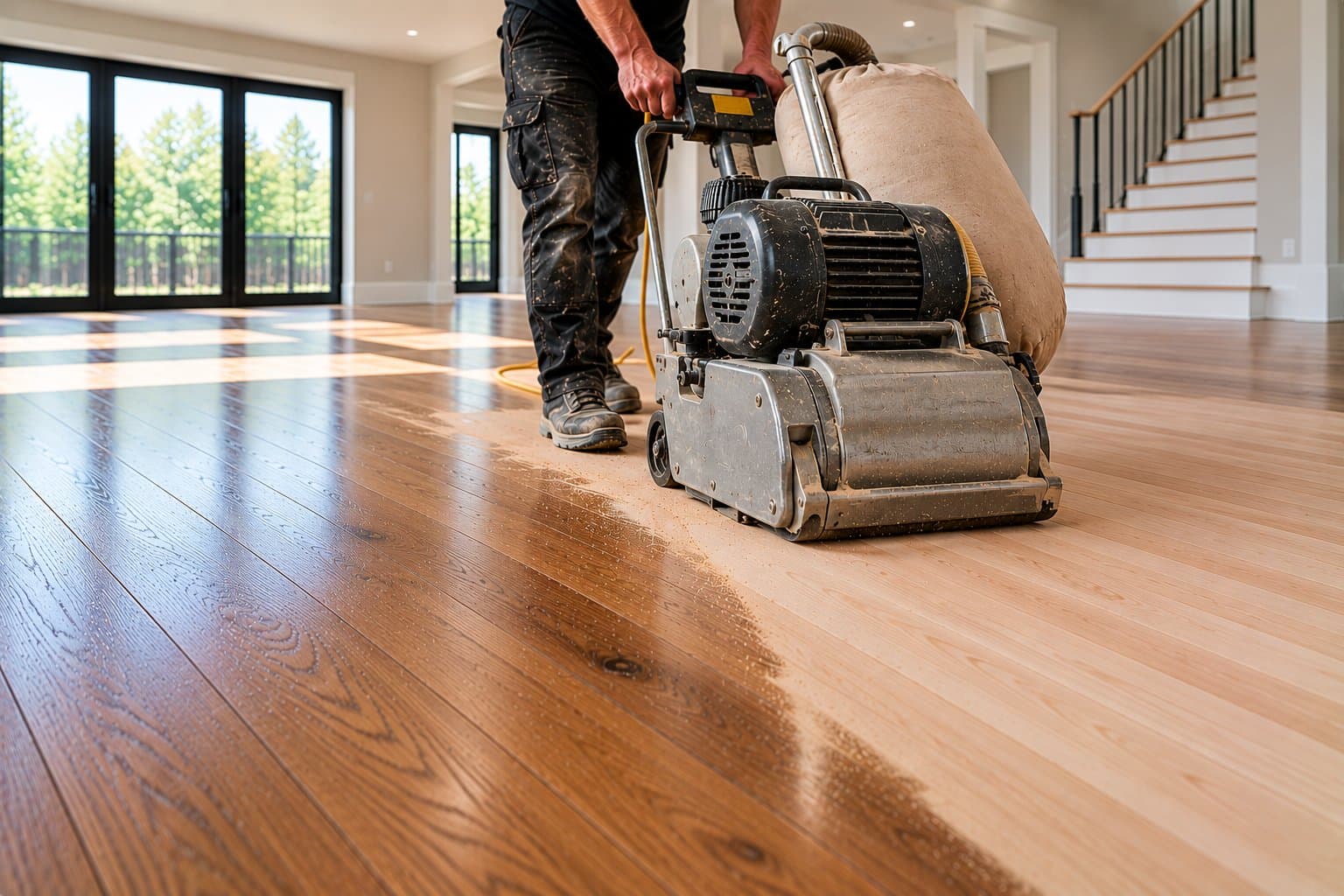
Worn hardwood sanded back to bare wood, stained if you want a new colour and sealed with fresh finish, or just recoated when only the finish is worn.
Learn more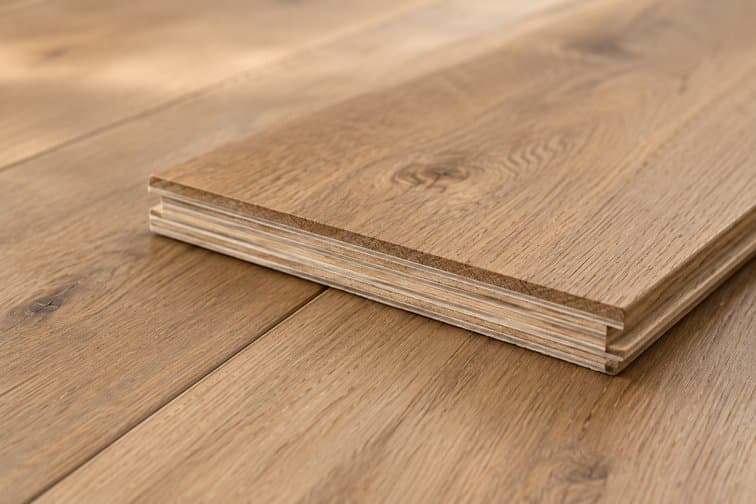
Engineered Hardwood Flooring
Real hardwood on top and a cross-laid ply core underneath, so you can have a wood floor over concrete, in a dry basement or over approved in-floor heat.
Learn more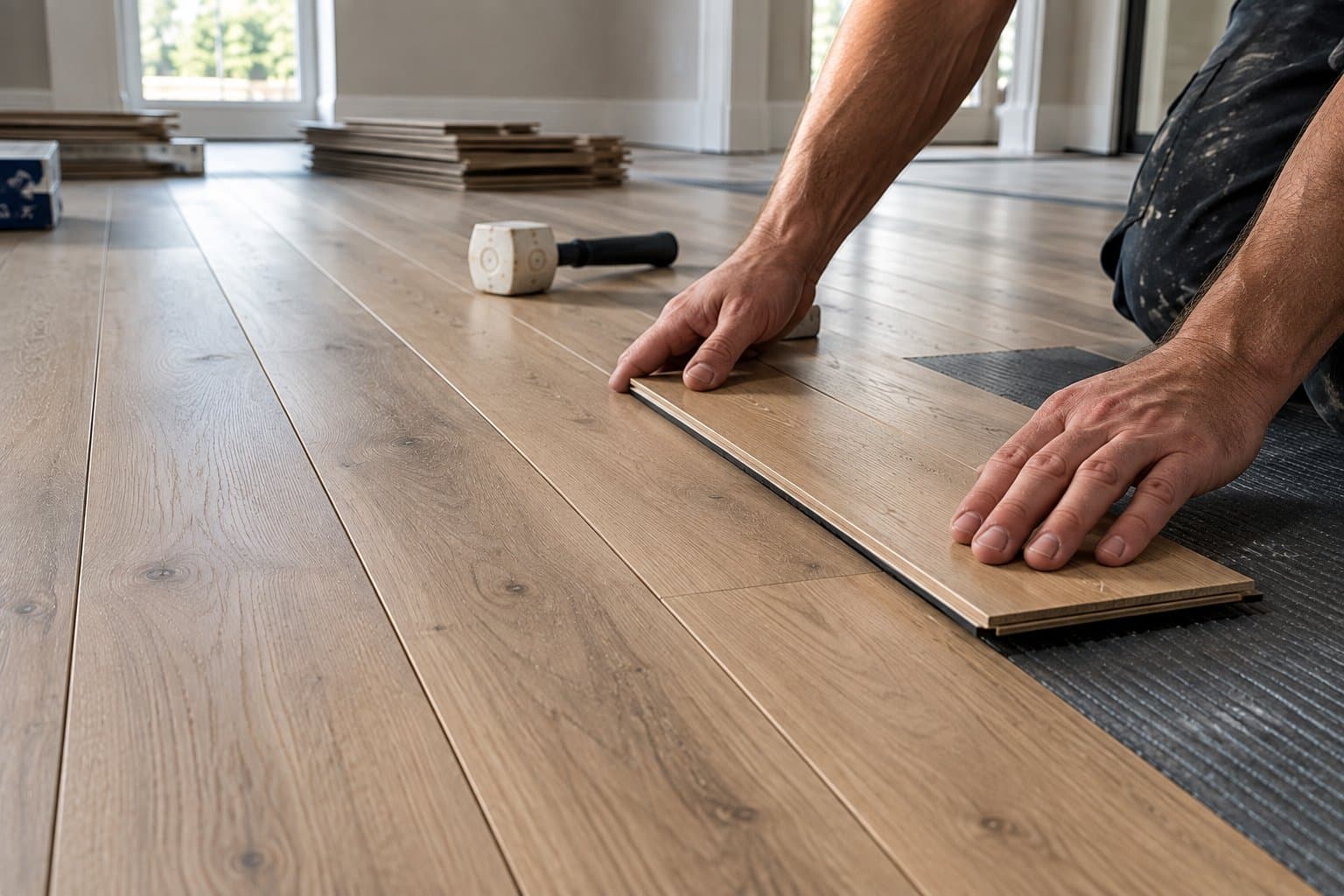
Flooring Installation
We install waterproof laminate, vinyl plank, engineered and solid hardwood, and luxury vinyl tile over a checked subfloor, with the gaps, underlay and transitions each product needs.
Learn more
Free Estimate
Let's talk about your floor.
Call (604) 787-5557 or request a Free Estimate online. The on-site measure is free, there's no obligation, and you'll usually hear back the same day.