
Service
Hardwood Floor Refinishing in Maple Ridge and the Lower Mainland
Refinishing takes the old finish and a thin layer of wood off a floor with a sander, down to bare, even wood. A stain goes on next if you want a new colour, then fresh coats of protective finish. Most surface scratches, grey traffic lanes and sun-faded patches come off along the way. When the wood is still sound and only the finish has worn, a lighter job called a screen and recoat may be enough: the old finish is scuffed and a new coat goes on top.
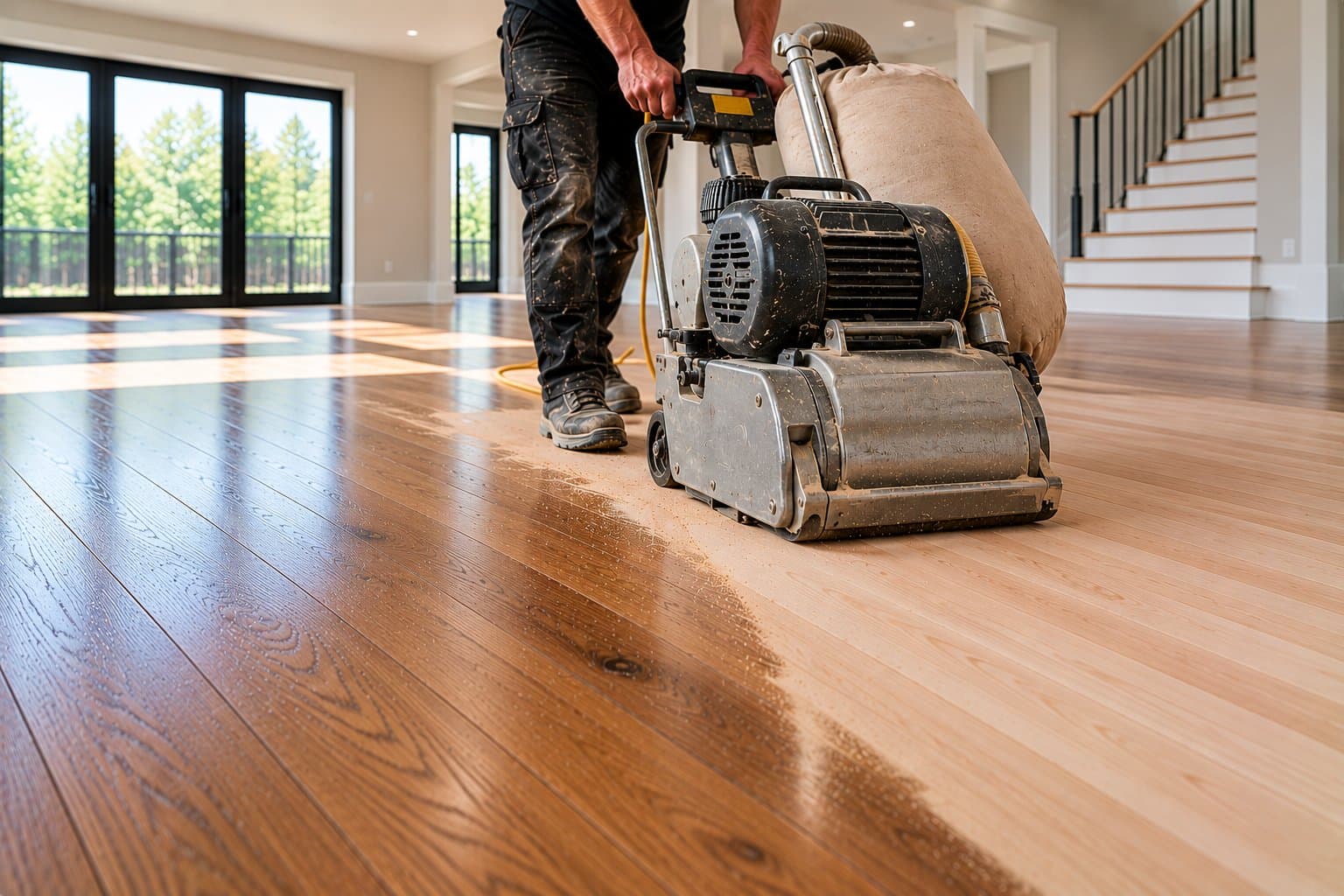
WoodPro Flooring refinishes wood floors across Maple Ridge, Pitt Meadows and the Lower Mainland, from the oak and fir in older houses to engineered floors with a thick enough top layer. Whether your floor can be sanded, and whether it needs to be, are both answered in person before any price. If a recoat would do, or the floor is past refinishing, you'll hear that instead.
Why it matters
Keeps the floor you already have
A solid hardwood floor can be refinished several times over its life. It usually costs less than a new wood floor, and far less goes to the landfill than with a tear-out.
Only as much work as the floor needs
When only the finish is worn, a screen and recoat renews it with far less dust and time than a full sand, and it saves the wood for a later sanding.
Problems fixed before the finish goes on
Loose boards, squeaks and damaged boards are dealt with while the floor is bare. Once the new finish is down, a repair is much harder to hide.
A colour seen on your own floor
Stain looks different on every species, and from board to board. Samples go on your sanded floor first, so you choose from the real thing, not a printed chip.
The honest version
Pros and cons
Pros
- Usually costs less than taking up a wood floor and installing a new one
- Removes most scratches, worn traffic lanes, dull patches and surface marks along with the old finish
- A chance to change the colour with stain, or go back to the natural wood
- Nothing is torn out, so floor heights, doorways and transitions stay as they are
Cons
- Sanding is loud and makes fine dust. Dust collection on the sanders catches most of it, but not all, so some can still reach the rest of the house.
- The rooms being done have to be completely empty, and nobody can walk on them while the finish dries. Every finish smells while it dries, oil-based ones most of all.
- Not every mark comes out. Black stains from water or pet urine, and deep dents, often go too deep to sand out, and filled holes can still show up close.
- Each full sanding takes wood off for good. A thin engineered top layer can't be sanded at all, and a solid floor sanded several times already may be near its limit.
Which floors can be refinished, and how many times
A standard 3/4-inch solid hardwood board has roughly a quarter inch (about 6 mm) of wood above its tongue. A full sanding takes off about a millimetre, so a solid floor can usually be sanded several times, though an uneven or cupped floor loses more wood on its first sanding. Once sanding nears the tongue, the joints show and the thin wood over the groove can split away. Thinner solid floors, like the 5/16-inch strip in some older houses, have much less to give.
Engineered hardwood depends mostly on its wear layer, the real wood on top of the core. At about a millimetre per sanding, a veneer under about 1mm can't be sanded at all, around 2mm allows one careful sanding at best, 3mm allows one or two, and 4mm or more allows several. Many prefinished boards also have bevelled edges a sander can't reach, so the old finish and colour stay in those grooves unless they're scraped out by hand.
Not sure what you have? Look at the cut end of a board under a floor vent cover, at a doorway or at the top of the stairs. It shows whether the board is solid all the way down, how thick the real wood is on engineered, and roughly how much is left above the tongue.
Laminate and vinyl plank can't be refinished at all. Their wood look is a printed picture under a thin wear layer, and a sander would go straight through it. Worn or damaged planks get replaced instead.
In older houses, a floor or border that was ever painted should have the paint tested for lead before anyone sands it, because sanding turns it into dust that spreads through the house. Health Canada advises that paint in homes built before 1960 is likely to contain lead, and some paint used up to 1990 did too.
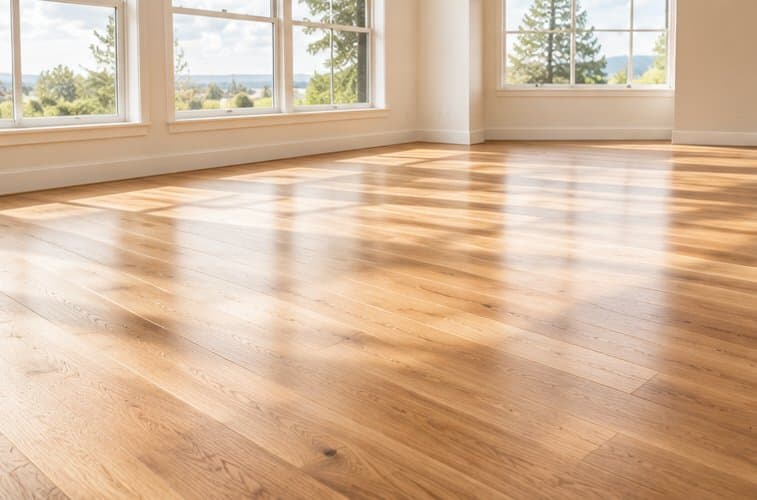
Full sand, recoat or repair first: what the floor actually needs
If the wear is only in the finish, a screen and recoat is usually enough: the old finish is scuffed with a floor machine and a fresh coat goes on. It never reaches the wood, so scratches in the wood, grey worn-through lanes, stains and dents stay. The new coat also has to stick. Wax, oil soaps and shine-restoring polishes can make it peel later, so a small test patch comes first, and a floor that fails it usually needs a full sand.
Anything wrong with the boards themselves is dealt with before the sander goes on: loose boards fastened, squeaks fixed, and boards with deep gouges or black stains cut out and replaced with matching wood, since sanding only goes so deep.
Thin gaps that open in winter, when the heat dries the air indoors, are normal and best left unfilled, because filler gets crushed when the boards swell back. Wide, permanent gaps in old fir can be left as character or filled with thin strips of wood, each glued to one side of the gap only, so the boards can still move.
Cupped boards, with their edges higher than their centres, are a moisture problem. In the Lower Mainland it's usually damp from a crawlspace with bare soil and no vapour barrier, or a leak. That has to be fixed first, which is usually work for a plumber or a crawlspace contractor. Then the floor is left to dry until moisture readings on the boards, not the calendar, show it's back in line with the rest of the house, which can take weeks. Sanded flat too soon, the boards dry out with their centres high instead.
Hardwood stairs can be refinished too, but each tread and nosing is sanded with small machines and by hand, so they take longer than their size suggests. Ask how you'll get up and down while the finish dries. A lower sheen hides wear on the treads, but it doesn't make a finish much less slippery. If grip worries you, ask whether the finish going on has an anti-slip option. Rough steps found under old carpet were never meant to be seen, and those need new treads rather than a refinish.
Stain, finish and the days you can't use the room
Take your time choosing a stain. The same colour looks different on oak, maple and fir, and maple and fir can look blotchy. Choose from samples on your own sanded floor, with a little finish over them if possible, and look at them in daylight and again in the evening. Darker colours show dust, pet hair and scratches more. Changing the colour later means sanding again.
The finish is what protects the wood, and there are three common kinds. Oil-based polyurethane is tough and turns a warmer amber over the years, with the strongest smell and the longest wait between coats. Water-based polyurethane dries clear, smells much less and dries faster. Hardwax oils mostly soak into the wood and leave little or no film on top. They're easy to touch up in one spot, but they need re-oiling from time to time. Matte and satin hide scratches better than gloss. Ask which product is going on and how to care for it.
Once the finish starts going on, the rooms are off limits until each coat has dried. Every finish gives off fumes while it dries, oil-based ones the most. People sensitive to fumes, babies and pets, especially birds, are better off elsewhere for those days. With solvent-based products, pilot lights on nearby gas appliances should be turned off while the finish goes on, because the vapour can catch fire.
Dry and cured are different things. A finish is usually dry enough for socks a day or two after the last coat, but it keeps hardening for days to weeks. Furniture usually goes back after a few days, on felt pads, and rugs often wait a couple of weeks. The finish's own instructions set the exact times. Cold slows every finish, and damp air slows water-based finishes most, so turning the heat down or leaving windows open to a cold, wet Lower Mainland day can stretch them.
FAQ
Refinishing: common questions
Something we haven't covered? Ask — the person who answers is the one who does the work.
How do I know whether my floor needs a full sand or just a recoat?
Put a few drops of water on the most worn spot and leave them for a few minutes. If they bead, the finish is intact and a recoat may be enough, as long as the floor hasn't been waxed or polished with something a new coat won't stick to. If the water soaks in and darkens the wood, the wear has reached the wood and only a full sand takes it out.
We found fir floors under the old carpet. Can they be refinished?
Often, yes, but fir is a softwood, so it dents easily and not every old dent will sand out. Expect a row of nail holes along the walls from the carpet tack strip, and small staple holes across the floor from the underpad. They can be filled, but they still show up close. Many people finish fir clear, since it takes stain unevenly. Check first that it isn't rough subfloor planking, never meant to be seen.
Can engineered hardwood be refinished?
Only if the wear layer, the real wood on top, is thick enough. Each full sanding takes off about a millimetre, so a thin veneer can't be sanded at all, while about 3mm or more usually allows at least one sanding. The cut edge at a floor vent or doorway shows the thickness, and so does the original box. Even a thin wear layer can often take a recoat, as long as the factory finish is prepared the way its maker says.
Will sanding take out dark stains and pet marks?
It depends how deep they go. White marks in the finish, and grey marks where water only just reached the wood, usually sand out. Black stains come from water or pet urine reacting with the wood, in oak especially, and often run too deep for sanding to reach. Those boards are usually cut out and replaced with matching wood before the floor is sanded.
Do we need to move out while the floors are done?
Not always, but the rooms being done are out of use, and while the finish is going on its smell can carry through the house. If the floor or stairs being done sit between the bedrooms and the bathroom, or anyone in the house is sensitive to fumes, a few nights away makes it much easier.
Goes well with
Related services & materials
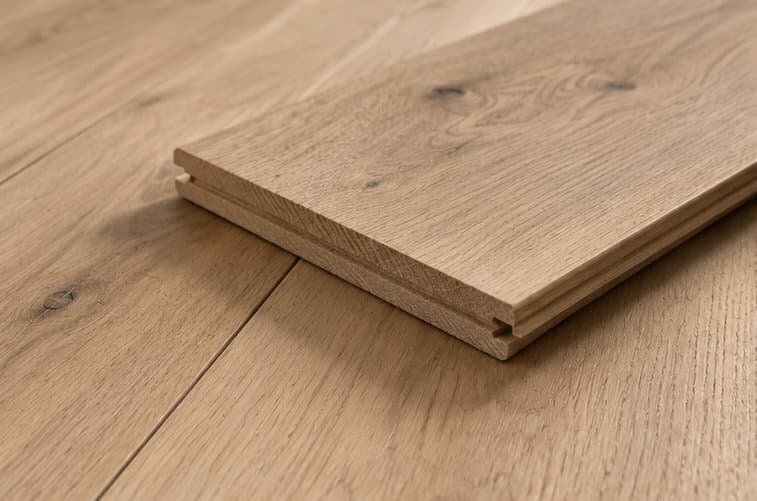
Solid Hardwood Flooring
Each board is one piece of real wood, nailed to a wood subfloor above grade, with enough wood above the tongue to be sanded and refinished several times.
Learn more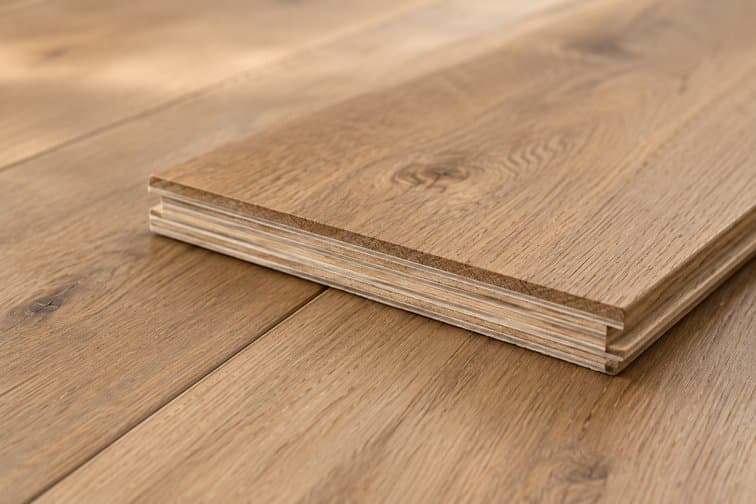
Engineered Hardwood Flooring
Real hardwood on top and a cross-laid ply core underneath, so you can have a wood floor over concrete, in a dry basement or over approved in-floor heat.
Learn more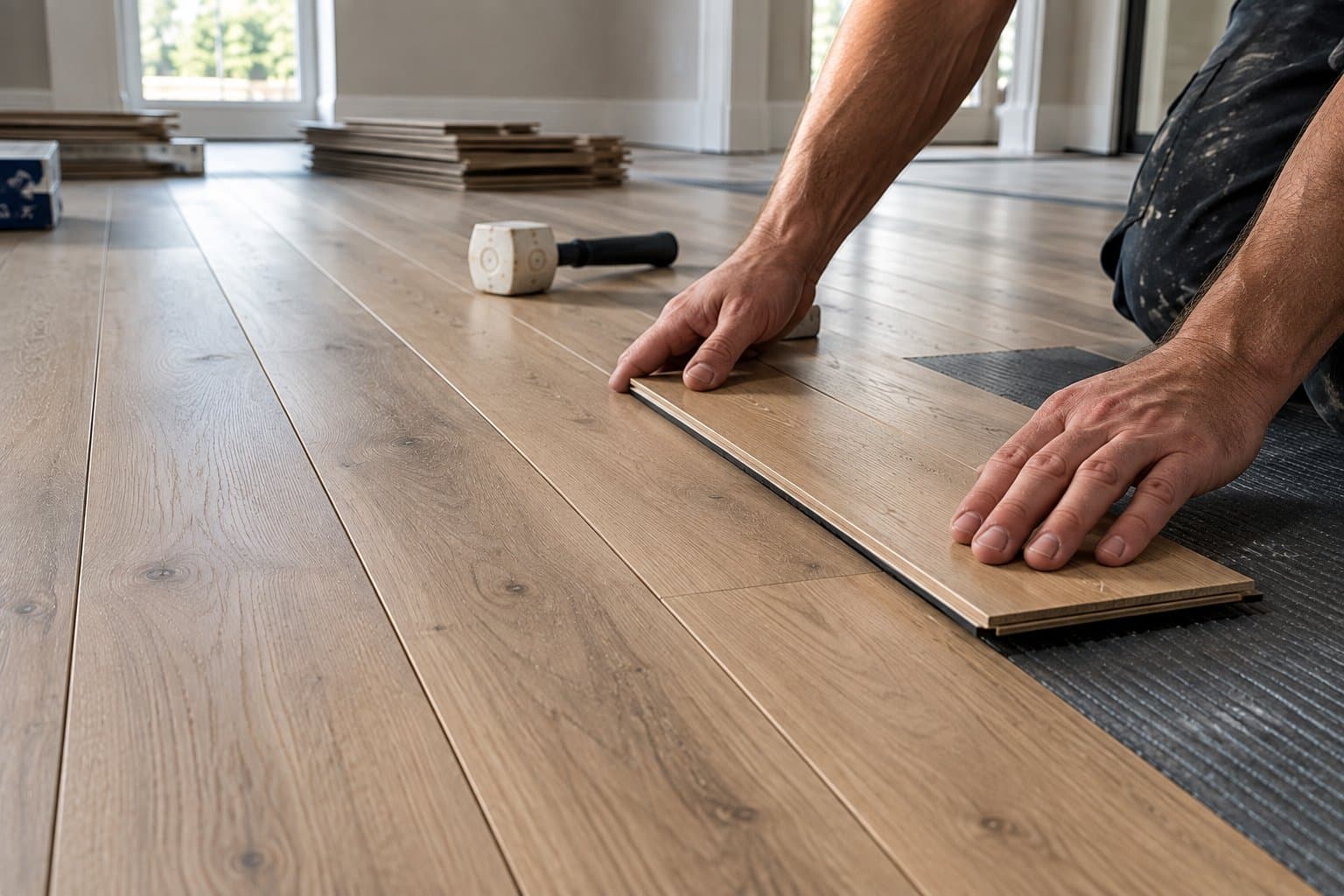
Flooring Installation
We install waterproof laminate, vinyl plank, engineered and solid hardwood, and luxury vinyl tile over a checked subfloor, with the gaps, underlay and transitions each product needs.
Learn more
Free Estimate
Let's talk about your floor.
Call (604) 787-5557 or request a Free Estimate online. The on-site measure is free, there's no obligation, and you'll usually hear back the same day.