
Material
12mm AC4 Waterproof Laminate, Supplied and Installed
Laminate is a printed image of wood under a clear, very hard wear layer, on a core of compressed wood fibre. That wear layer is why people choose it. It generally resists scratches better than the surface of vinyl plank or the finish on a real-wood floor, so grit, chair legs and dog claws tend to mark it less than either.
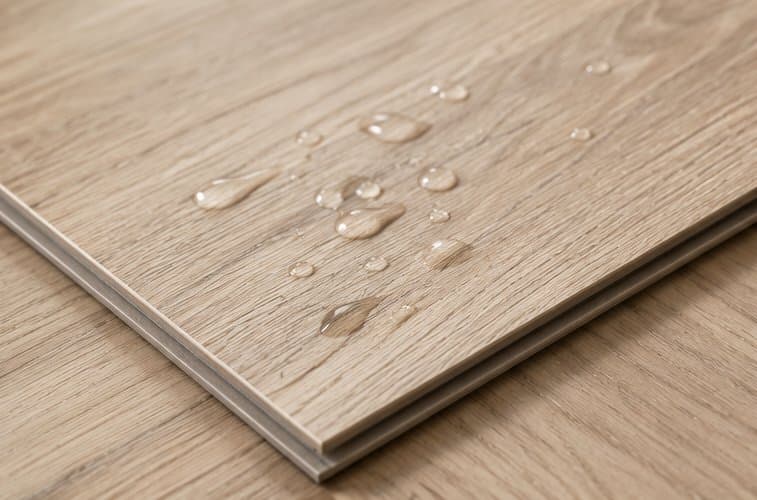
WoodPro supplies and delivers a 12mm, AC4-rated laminate sold as waterproof. This page explains what each of those three specs means, where the word "waterproof" stops applying, and which rooms in your house it suits. That way you know what you're buying before anyone measures.
Why homeowners choose it
Hard to scratch
An AC4 wear surface stands up to grit, chair legs and dog claws better than vinyl plank does. That makes it a practical choice for busy rooms where scuffs and scratches are the main worry.
Handles everyday water
Waterproof laminate is built so that spills, pet accidents and water from wet boots stay on top of the floor, where you can wipe them up. Standard laminate swells if water works into its seams.
Feels solid underfoot
A 12mm board is stiffer than the 7 or 8mm laminate common in budget ranges. It sounds less hollow, feels closer to a wood floor and is a little more forgiving of very small dips in the subfloor.
Rated well past household traffic
AC4 is rated for general commercial traffic, so every room in a house is within its rating, including the front entry and the hallway everyone walks down.
The honest version
Pros and cons
Pros
- Generally better scratch resistance than vinyl plank or a finished real-wood floor
- AC4 surface is rated beyond normal household traffic, entries and hallways included
- 12mm thickness feels solid and sounds less hollow than thinner laminate
- Waterproof construction handles spills, pet accidents and wet boots when they're wiped up
- Floats over most flat subfloors, including concrete with a vapour barrier, with no glue or nails
Cons
- The core is still wood fibre. "Waterproof" covers water on the surface for a rated time, not flooding, not water under the floor and not damp coming up through a slab.
- Louder than vinyl. You get a firmer click underfoot and more noise carried to the room below. Underlay reduces it but doesn't remove it.
- Damage is permanent. A deep chip, a gouge or a board that has swollen from water can't be sanded out or patched invisibly, so that board has to come out and be replaced.
- 12mm plus underlay adds height, so doors, transitions to other rooms and stair edges need planning before the floor is ordered.
What AC4 and 12mm actually tell you
Laminate is graded by abrasion class, from AC1 up to AC5 (a few commercial products go to AC6), under a European test standard. The test wears the surface down with abrasive wheels and also checks impact, stain and burn resistance. The AC rating is the best single guide to how the surface will look after years of traffic.
AC1 is meant for light use, such as a bedroom, and AC2 for general household use. AC3 is rated for all residential use, busy hallways included, and is the sensible minimum for a whole house. AC4 is rated for general commercial traffic, like offices and small shops, which leaves every room in a home comfortably within its rating. AC5 is for heavy commercial floors.
Thickness is a separate spec. Most of the 12mm is core, and a thicker core doesn't make the surface any tougher. What it does is make the board stiffer, so the floor sounds less hollow, feels more solid underfoot and copes a little better with very small dips in the subfloor than a 7 or 8mm board.
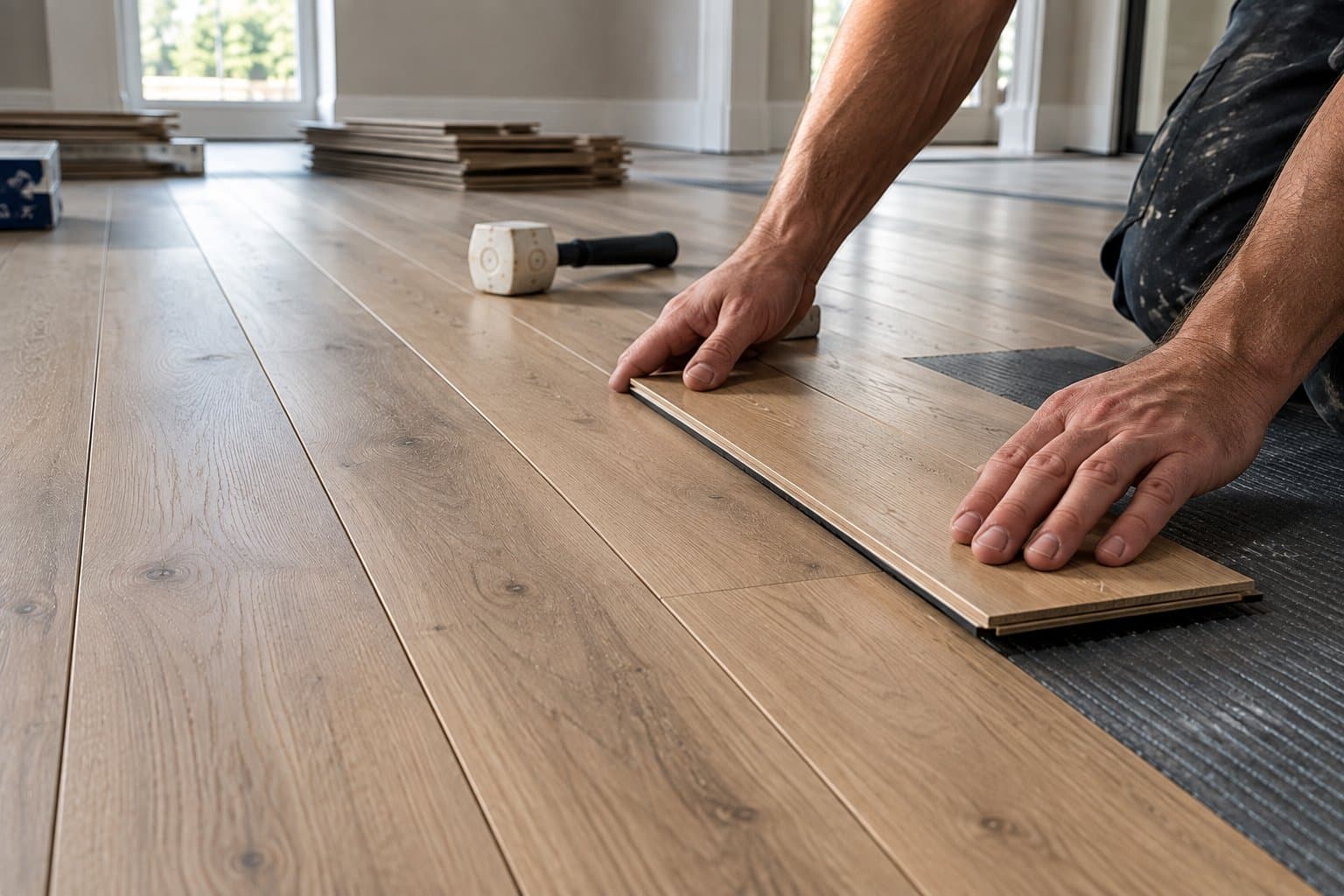
A thick board doesn't replace a flat subfloor, though. Laminate makers set a flatness limit, commonly around 3/16 inch over 10 feet. Outside that, the boards can flex at the joints until the joints open or break. If the subfloor is out, it gets levelled before the new floor goes down.
Thicker also means taller. With underlay, a 12mm floor can sit well above the carpet or thin vinyl it replaces. That affects door clearance, the step into the next room and the top and bottom of any staircase. Transitions, trimmed doors and stair nosings made to match the floor deal with it, but that should be planned before the floor is ordered, not discovered on install day.
Waterproof versus water-resistant, and where both stop
Ordinary laminate has a core of compressed wood fibre. When water works into it, almost always through the seams, the core swells, and swollen laminate doesn't go back down. That's where laminate got its old reputation for puffy, peaked joints.
Water-resistant laminate gives you some time to wipe up a spill. Waterproof laminate goes further. It has a denser core treated to repel water and tighter locking joints, so water sitting on the floor stays on top. Manufacturers warrant this for a set period, and the fine print usually says how many hours water can sit before it becomes a problem.
What it doesn't give you is a waterproof room. The core is still wood fibre, and the warranty covers water on top of the floor. Water that gets underneath, whether from a flood, a slow leak under a cabinet or damp coming up through a concrete slab, has nowhere to dry out. That's how mould ends up under a floor that looks fine from above.
In other words, a waterproof floor survives the dishwasher leak you notice. It doesn't save you from the one you don't. Over concrete, a vapour barrier still goes down first, whatever the label says. Before you choose any waterproof laminate, read what its warranty says about kitchens, bathrooms and basements. Those rules are the ones that count if something goes wrong.
Laminate or vinyl plank: scratches, sound and which room gets which
The surface is where laminate wins. Its top layer is a melamine resin hardened with aluminum oxide, and it generally resists scratching better than the wear layer on vinyl plank. Grit off wet boots, chair legs and dog claws will usually mark vinyl sooner.
Vinyl is stronger in other ways. Its core doesn't soak up water, so it can't swell the way laminate's wood-fibre core can, and it's softer and warmer underfoot. It's also the safer choice anywhere water could sit for a while before anyone notices.
Vinyl is quieter too. Laminate floats on underlay and has a hard surface, so it clicks more underfoot and carries more noise to the room below. A 12mm board and a good underlay cut that down but don't remove it. In a condo or strata townhouse, check the bylaws before choosing any hard floor. Many buildings set a minimum sound rating for flooring over another unit, and the underlay is usually what gets you there.
Where laminate belongs: living and dining rooms, bedrooms, hallways, home offices and upper floors, where scratch resistance matters most. Kitchens and entries suit a waterproof laminate as long as spills get wiped up. A dry basement slab with a vapour barrier is usually fine if the product allows it. A basement that has ever taken water, a laundry room or a bathroom with a tub or shower should get vinyl plank or vinyl tile instead.
FAQ
Waterproof Laminate: common questions
Something we haven't covered? Ask — the person who answers is the one who does the work.
Is waterproof laminate actually waterproof?
On the surface, for a limited time, yes. It has a treated core and tight joints, so a spill, a pet accident or water off wet boots stays on top where you can wipe it up. The manufacturer's warranty has the details, usually as a number of hours water can sit. It isn't rated for flooding or for water getting under the floor, because the core is still wood fibre. That's the real difference from vinyl plank, whose core doesn't absorb water at all.
Is 12mm laminate better than 8mm?
For feel and sound, generally yes. A thicker board is stiffer, sounds less hollow and copes a little better with very small dips in the subfloor. For scratch and wear resistance, thickness makes no difference. That's what the AC rating measures. A 12mm AC3 board is rated lower for abrasion than an 8mm AC4 board, so compare the AC rating first and thickness second.
Can waterproof laminate go in a basement?
Often, if the slab is dry and the product's instructions allow installation below grade. It floats over a vapour barrier, either a plastic sheet or an underlay with one built in, which keeps moisture rising from the concrete away from the wood-fibre core. What it can't handle is water arriving from below. If the basement has ever flooded, or the slab shows damp patches or a white, crusty deposit (a sign moisture is moving through the concrete), vinyl plank or vinyl tile is the better floor. Laminate warranties don't cover water from below.
Is laminate or vinyl plank better with dogs?
For claws, laminate. Its surface generally resists scratching better than vinyl's. For accidents, waterproof laminate is fine as long as they're found and wiped up within the product's rated time. For an older dog with frequent accidents, or a dog left alone for long stretches, vinyl plank is the safer choice because its core doesn't absorb water.
Can I see the laminate before I decide?
Yes. Samples are available, and the on-site measure and quote are free with no obligation. Call (604) 787-5557. Danny usually calls back the same day.
Goes well with
Related services & materials
Luxury Vinyl Plank
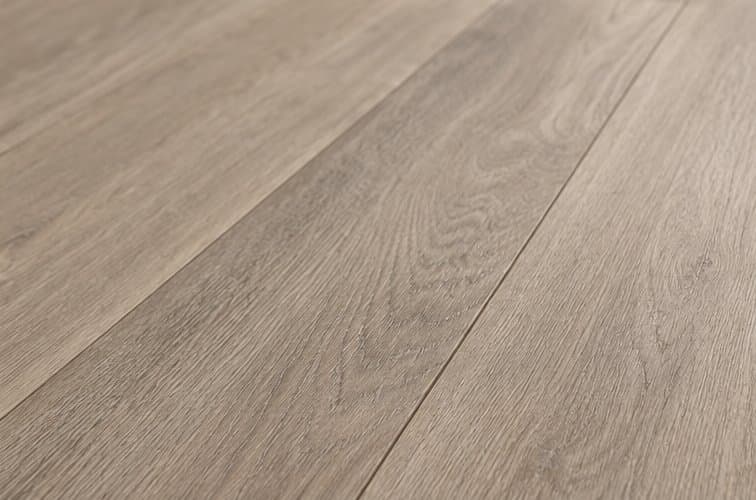
A plank that water won't swell, for basements, kitchens and homes with pets, as long as the floor underneath is flat.
Learn moreFlooring Installation
We install waterproof laminate, vinyl plank, engineered and solid hardwood, and luxury vinyl tile over a checked subfloor, with the gaps, underlay and transitions each product needs.
Learn more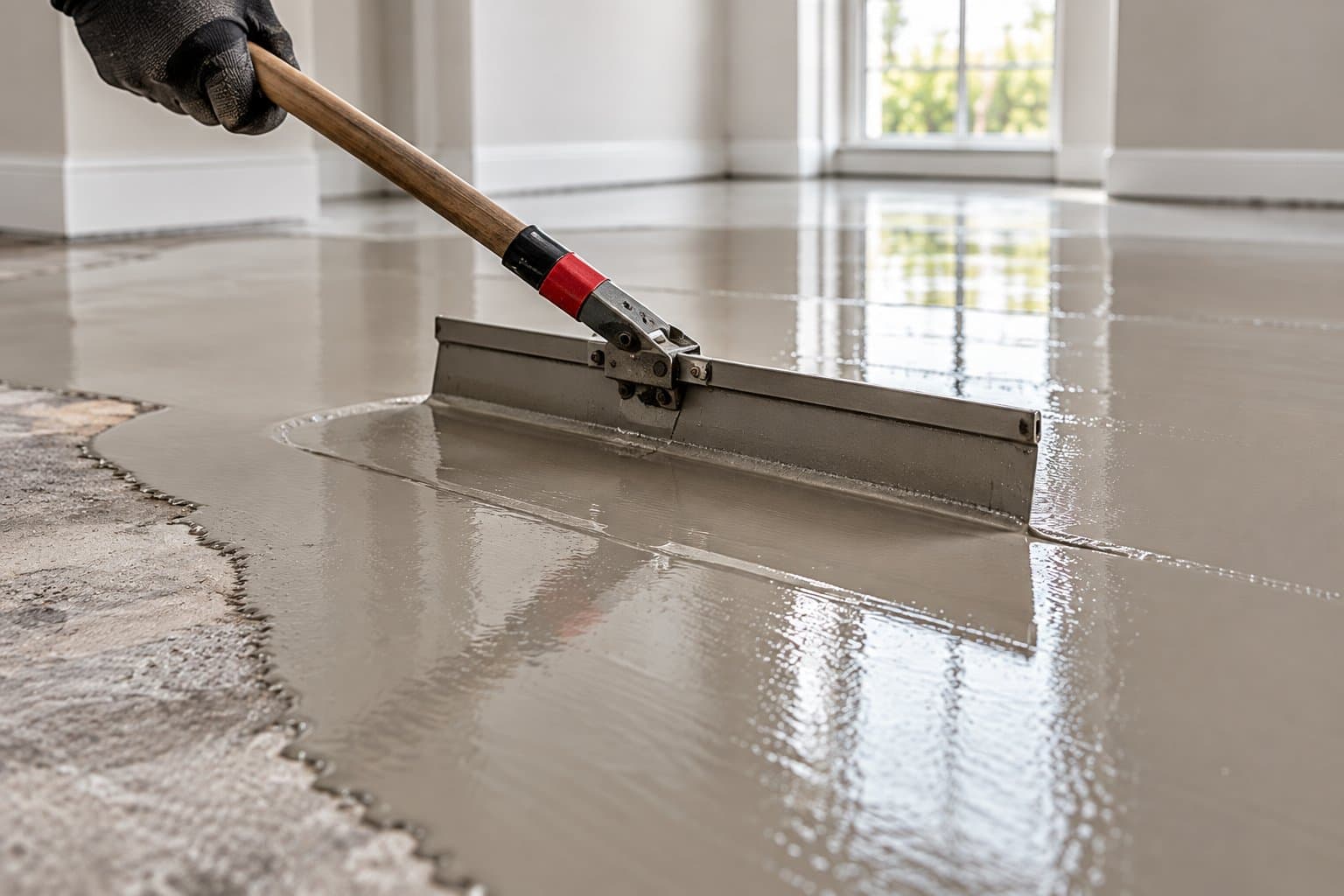
Floor Levelling
High spots ground down and low spots filled before the new floor goes in, so the planks sit flat instead of flexing at the seams with every step.
Learn more
Free Estimate
Let's talk about your floor.
Call (604) 787-5557 or request a Free Estimate online. The on-site measure is free, there's no obligation, and you'll usually hear back the same day.