
Service
Floor Levelling in Maple Ridge and the Lower Mainland
Most of the problems people blame on a new floor start with the subfloor underneath it: seams that open up, plank edges that lift, spots that feel soft or click when you walk on them. Laminate and most vinyl plank are floating floors. The planks click together and rest on the subfloor without being fastened to it, so they need a flat base. Laid over dips and humps, they flex with every step, and the joints give out first.
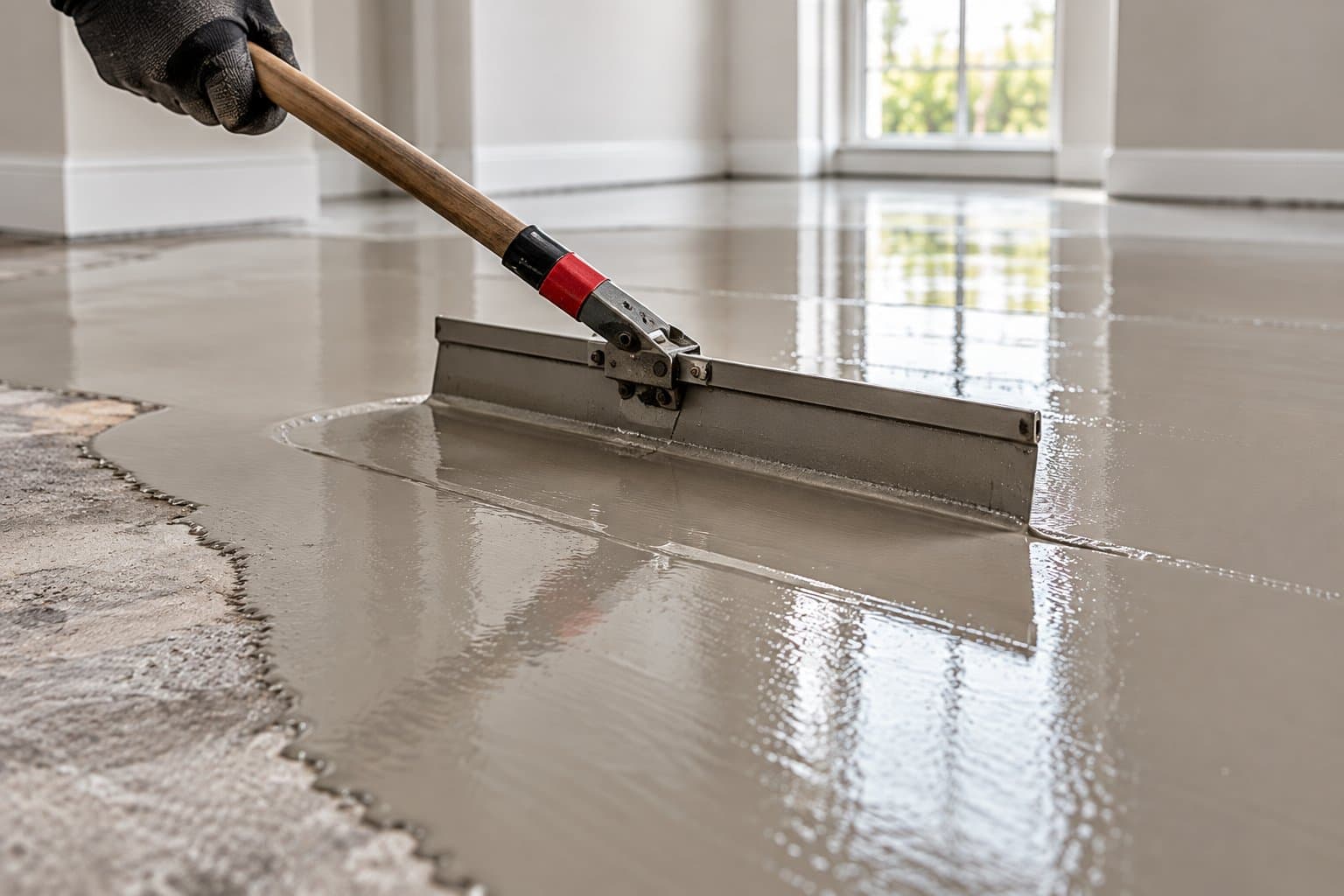
Levelling fixes that before the first plank goes down. The high and low spots are found, the highs are ground down, the lows are filled with self-levelling compound, and the subfloor is brought within the flooring manufacturer's flatness spec. It's a regular part of the work at WoodPro Flooring, and one of the things customers mention most in their reviews, for homes in Maple Ridge, Pitt Meadows and across the Lower Mainland.
Why it matters
Seams that stay closed
On a flat base, every click joint is supported along its whole length. It carries weight instead of bending at every step, and that is what keeps gaps from opening and edges from peaking.
A floor that feels solid
Filling the hollows and grinding the humps gets rid of the soft spots and clicking that make a new floor feel cheap, even when the planks themselves are good. A subfloor that bounces between the joists is a separate, structural fix.
Within the manufacturer's spec
Every laminate and vinyl plank comes with a flatness requirement in its installation instructions. Meeting it takes away the most common cause of seam failure, and it's one of the conditions manufacturers attach to their product warranties.
Flat, not necessarily level
Many rooms only need their dips filled and their humps ground down. A gentle, even slope across a room is usually fine for flooring, so there's no reason to pay for a whole-room pour it doesn't need.
The honest version
Pros and cons
Pros
- Deals with the most common cause of gapping seams, peaking edges and broken click joints in floating floors
- Gets rid of the soft spots, hollow sounds and clicking that come from planks bridging dips
- Brings the subfloor within the flooring manufacturer's flatness spec
- Thin, flexible vinyl no longer shows every ridge and dip underneath it
- It's done once, before the floor goes down. After that, the only way to fix the subfloor is to lift the new floor
Cons
- It adds time. Self-levelling compound has to cure before flooring can go over it, often overnight and longer for deep pours.
- The cost can't be pinned down until the subfloor has been checked, and sometimes not until the old floor is off and the subfloor is visible.
- Grinding concrete makes fine dust that contains silica, which is harmful to breathe. Dust extraction on the grinder catches most of it, but not all, so the work area needs to be closed off.
- It won't fix a structural problem. A sagging or crowned joist, or a subfloor that bounces, needs fixing before any levelling compound goes down.
Flat and level are not the same thing
Level means horizontal: a marble set down anywhere on the floor stays put. Flat means even: no dips or humps from one spot to the next. A floor can slope gently across a room and still be perfectly flat, and flooring handles that fine. A floor can also be close to level overall and still be full of hollows and ridges, and that is what ruins a floating floor.
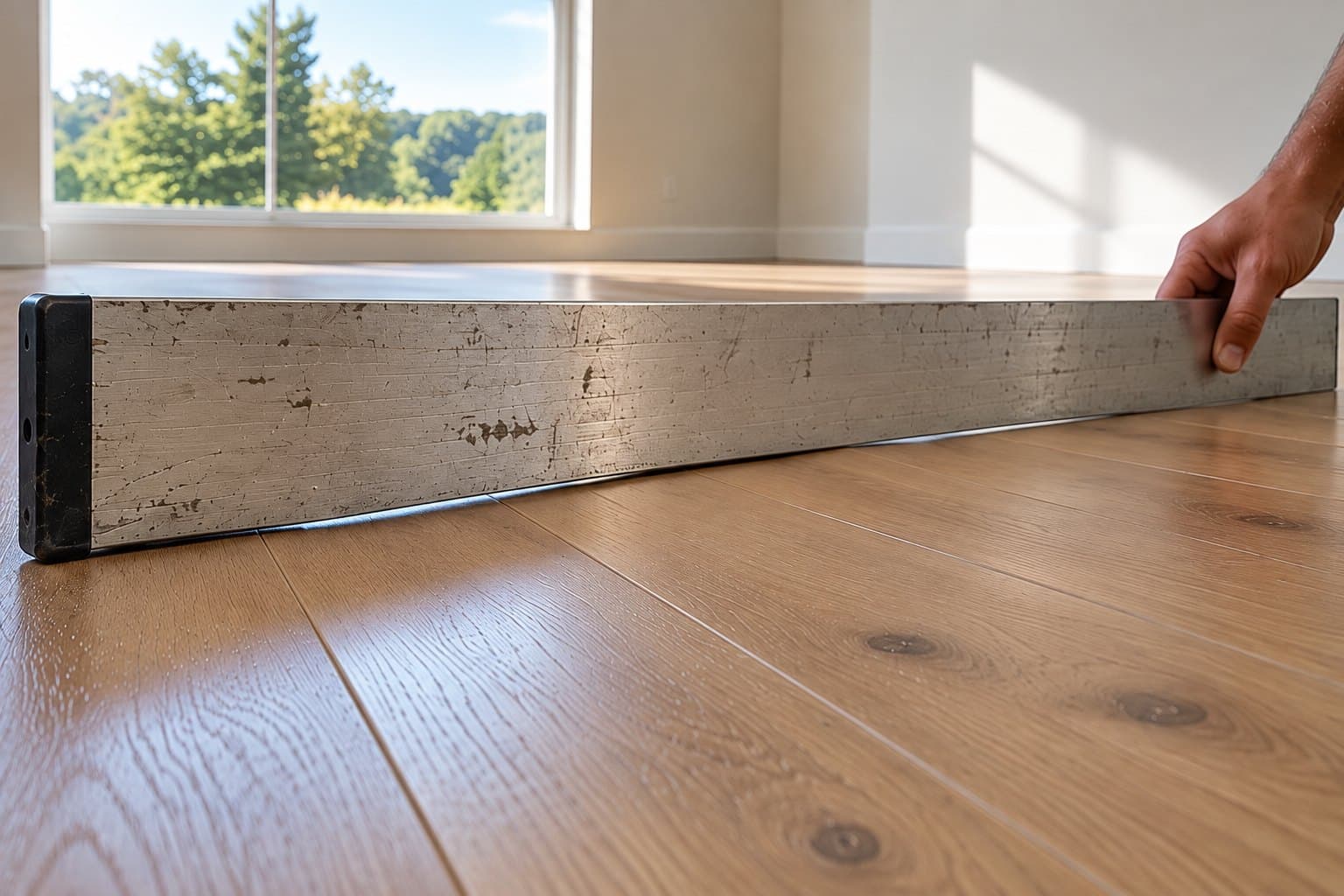
Flooring manufacturers specify flatness, not level. The usual figure is 3/16 inch over 10 feet, about 5 mm over 3 metres. Some also give a tighter figure over a shorter span, such as 1/8 inch over 6 feet. The exact number is in the installation instructions for the product you choose, and that's the number the subfloor has to meet.
Flatness is checked by laying a long straightedge across the floor in several directions. A gap under the straightedge is a low spot. A straightedge that rocks is sitting on a high one. Few older floors are flat everywhere. Concrete slabs have trowel ridges and dips, and plywood or OSB subfloors have raised seams and panel edges that swelled when they got wet at some point.
Why floating floors come apart at the seams
Laminate, most vinyl plank and some engineered flooring are laid as floating floors. The planks lock together at their edges and the whole floor rests on the subfloor as one connected sheet. That works well, but only if the sheet is supported everywhere.
Over a dip, a plank spans the gap like a small bridge. Every step pushes it down into the hollow, it springs back up, and it bends at the click joint. After enough foot traffic the lock wears loose. The seam opens, the plank edges rise (installers call this peaking), or the joint pops and clicks underfoot. Over a hump, planks rock like a see-saw and the joints on either side take the strain. Rigid-core vinyl bridges small dips better than flexible plank, but its stiffer locking edge can snap where a softer one would bend.
A thicker underlay doesn't fix any of this. Underlay is soft, so over a dip it squashes more and the plank above it flexes more. Many manufacturers say plainly that underlay must not be used to level a subfloor, and damage caused by a subfloor outside the flatness spec is commonly excluded from product warranties.
Thinner, flexible vinyl fails differently. It follows the subfloor closely, so a ridge or dip shows through as a line or shadow on the surface, and it's most visible in low light from a window.
Grinding the high spots, filling the low ones
High spots are dealt with first. On concrete, that means a grinder with a diamond wheel and a vacuum attached to hold the dust down. On a wood subfloor, it usually means sanding or planing raised seams and panel edges, and screwing down anything that has lifted. In homes built before about 1990, old sheet vinyl and any old adhesive left on the subfloor can contain asbestos, so they should be tested before anyone grinds them.
Low spots are filled next. Self-levelling compound is a cement-based mix poured wet over a primed surface. It flows out and settles flat by itself, which is where the name comes from. Very shallow dips and feathered edges are often filled with a trowel-on patching compound instead, because a pourable compound needs some depth to flow properly.
The goal is a flat floor, not necessarily a level one. Because the compound settles level, pouring it across a whole room that slopes builds it up deep at the low end, which is rarely worth doing for flooring.
A wood subfloor needs a few extra steps. It has to be stiff and securely fastened. Gaps have to be sealed so the wet compound can't leak through to the ceiling below. The primer and compound have to be products made for use over wood, and some systems also call for a metal lath or mesh fastened down first. If the real cause is structural, such as a sagging joist or a subfloor that bounces, levelling compound won't fix it and can crack. That's better to find out before the new floor is down than after.
FAQ
Levelling: common questions
Something we haven't covered? Ask — the person who answers is the one who does the work.
How do I know if my floor needs levelling?
If the old floor is already up, lay a long straightedge across the subfloor in a few directions. A 6- to 10-foot level or a straight board works. A gap of more than about 3/16 inch under a 10-foot length is outside what most floating floors allow. If a floor is still down, the warning signs are seams opening, plank edges lifting, soft or bouncy spots, and clicking underfoot. The free on-site measure is a good time to ask about it.
Can a thicker underlay make up for an uneven floor?
No, and it usually makes things worse. Underlay is soft, so over a dip it squashes more and the plank above it bends more at the joint. Many flooring manufacturers say underlay must not be used to level a subfloor, and some also limit how thick it can be. The fix for a dip is filling it.
My floor slopes. Does the whole room need to be levelled?
Usually not. Flooring manufacturers are mostly concerned with flatness (no dips or humps), not level. A gentle, even slope across a room is normally fine for laminate or vinyl plank. Pouring a whole sloped room dead level takes a lot of compound, adds weight, and raises the floor where it meets doorways. If you can feel the slope when you walk across the room, there may be a structural cause, and that's a different conversation.
How much time does levelling add to a flooring job?
It depends on how much there is to do. Grinding adds working time but no waiting. Self-levelling compound usually takes foot traffic within a few hours, but it has to cure before flooring goes over it. That is commonly by the next day, and longer for deep pours or in a cold, damp house. The product's data sheet sets the wait, and it's worth sticking to, because flooring laid over compound that hasn't cured traps moisture underneath.
Does every new floor need levelling?
No. Carpet and its underlay hide small dips, so carpet rarely needs more than a sound, well-fastened subfloor. Laminate, vinyl plank, vinyl tile, engineered and solid hardwood all have a flatness spec, and a floor that already meets it needs no levelling at all. Plenty of floors pass. The point of checking is to know for sure rather than guess.
Goes well with
Related services & materials
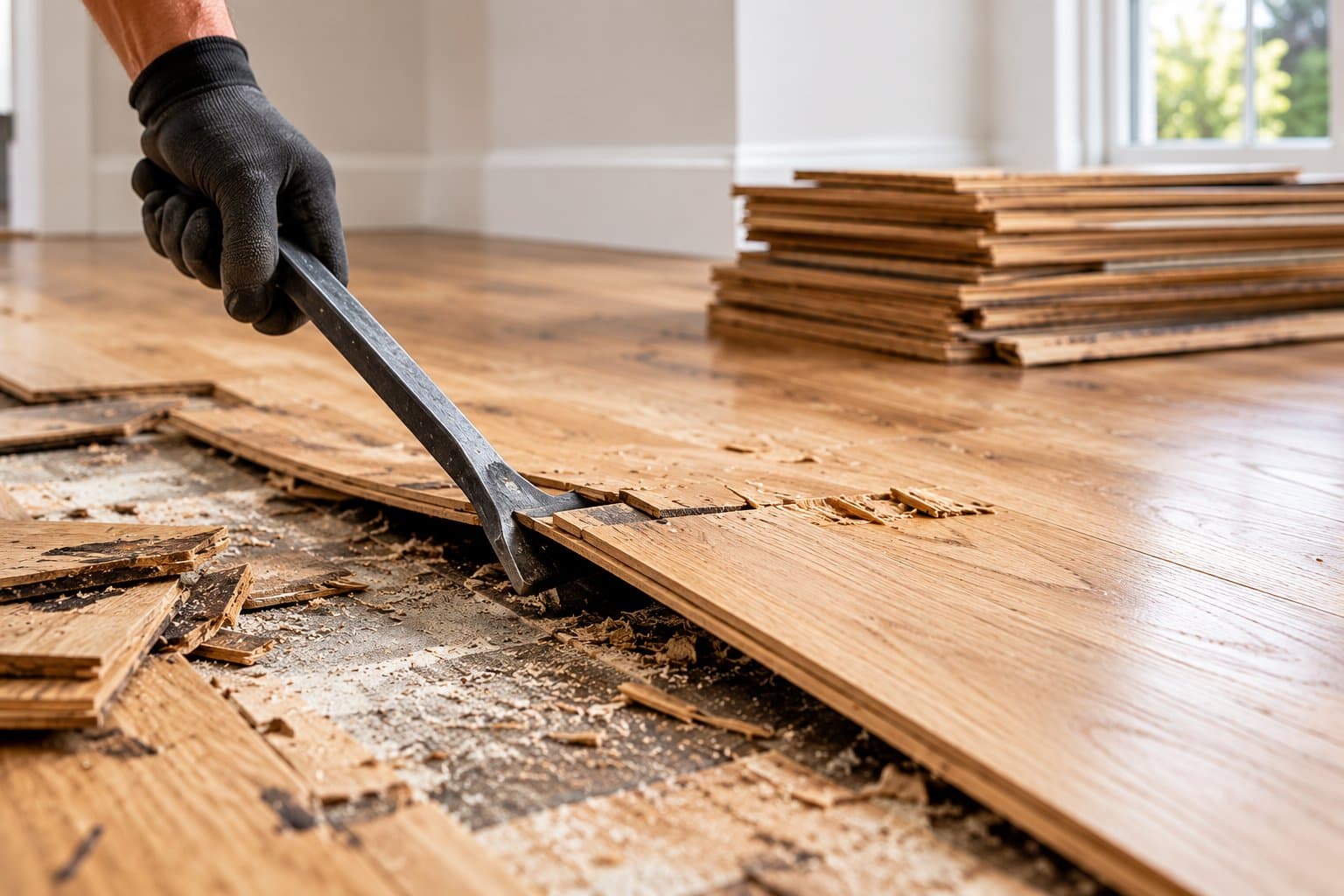
Floor Removal & Disposal
Old carpet, laminate, vinyl and tile taken up and hauled away, with the bare subfloor checked and pre-1990 vinyl and adhesive tested for asbestos before it's disturbed.
Learn more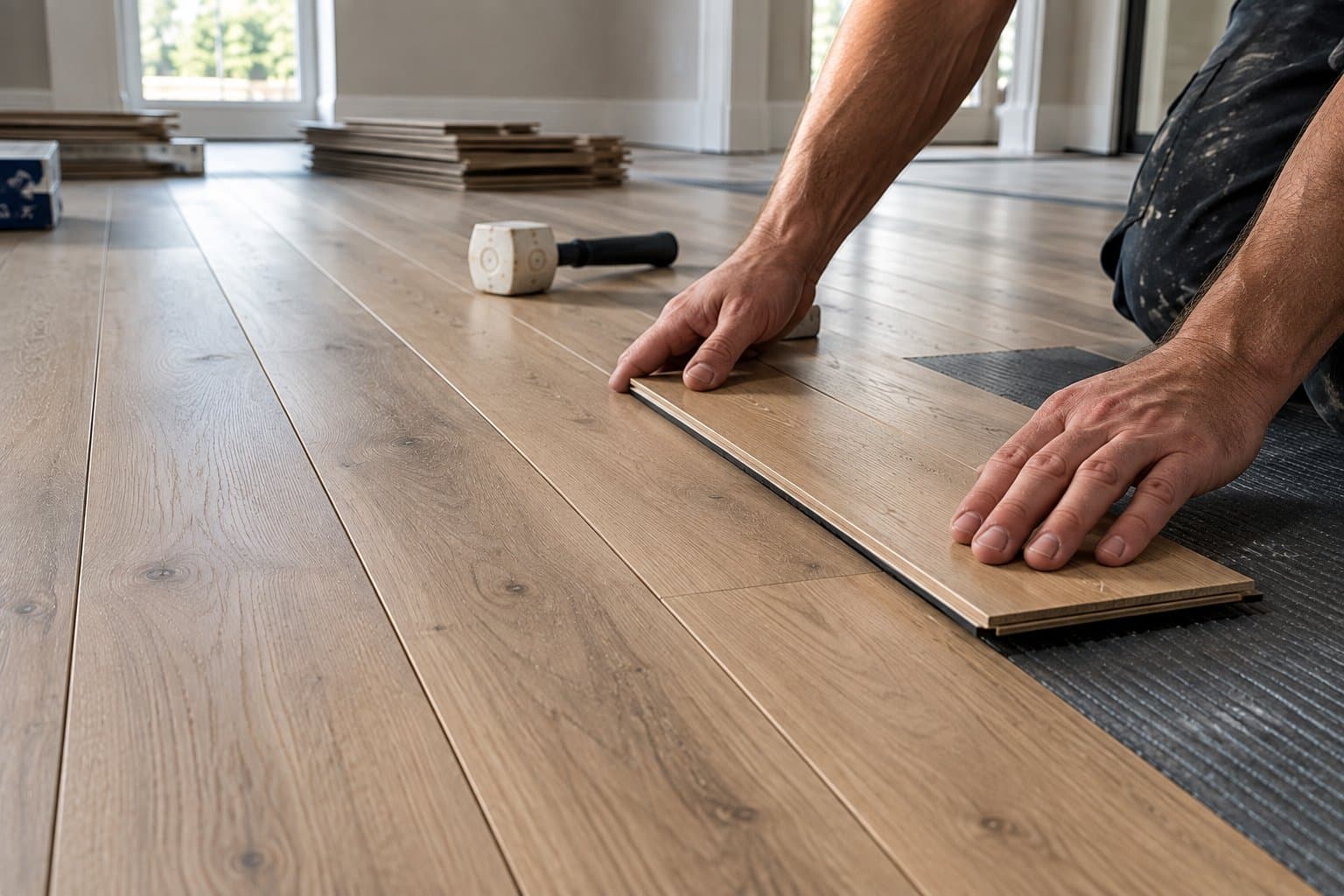
Flooring Installation
We install waterproof laminate, vinyl plank, engineered and solid hardwood, and luxury vinyl tile over a checked subfloor, with the gaps, underlay and transitions each product needs.
Learn more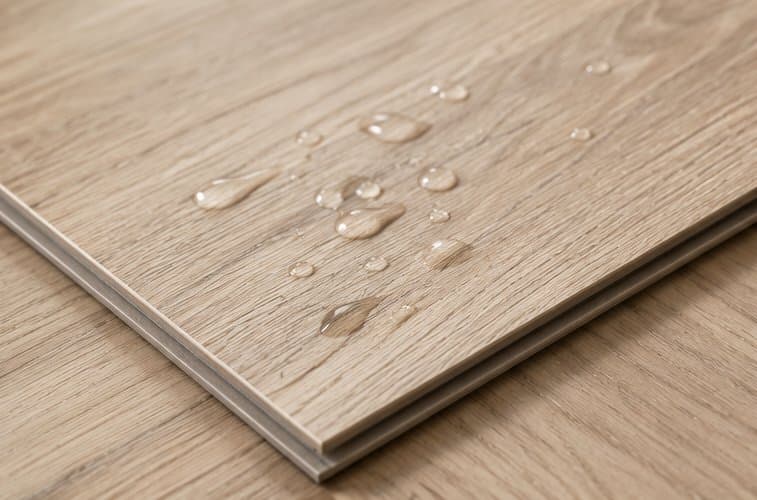
Waterproof Laminate
12mm AC4 laminate that resists scratches and handles everyday spills, supplied, delivered and installed, with samples available before you choose.
Learn more
Free Estimate
Let's talk about your floor.
Call (604) 787-5557 or request a Free Estimate online. The on-site measure is free, there's no obligation, and you'll usually hear back the same day.