
Service
Floor Repairs: Damaged Planks, Lifting Seams, Squeaks and Stair Nosings
Most damaged floors don't need replacing. A dropped cast-iron pan, a dishwasher leak caught early, a seam that has started to lift or a stair nosing working loose can usually be put right by taking out the damaged piece and fitting one that matches. That works as long as there's a matching piece to fit, and whatever caused the damage has been dealt with.
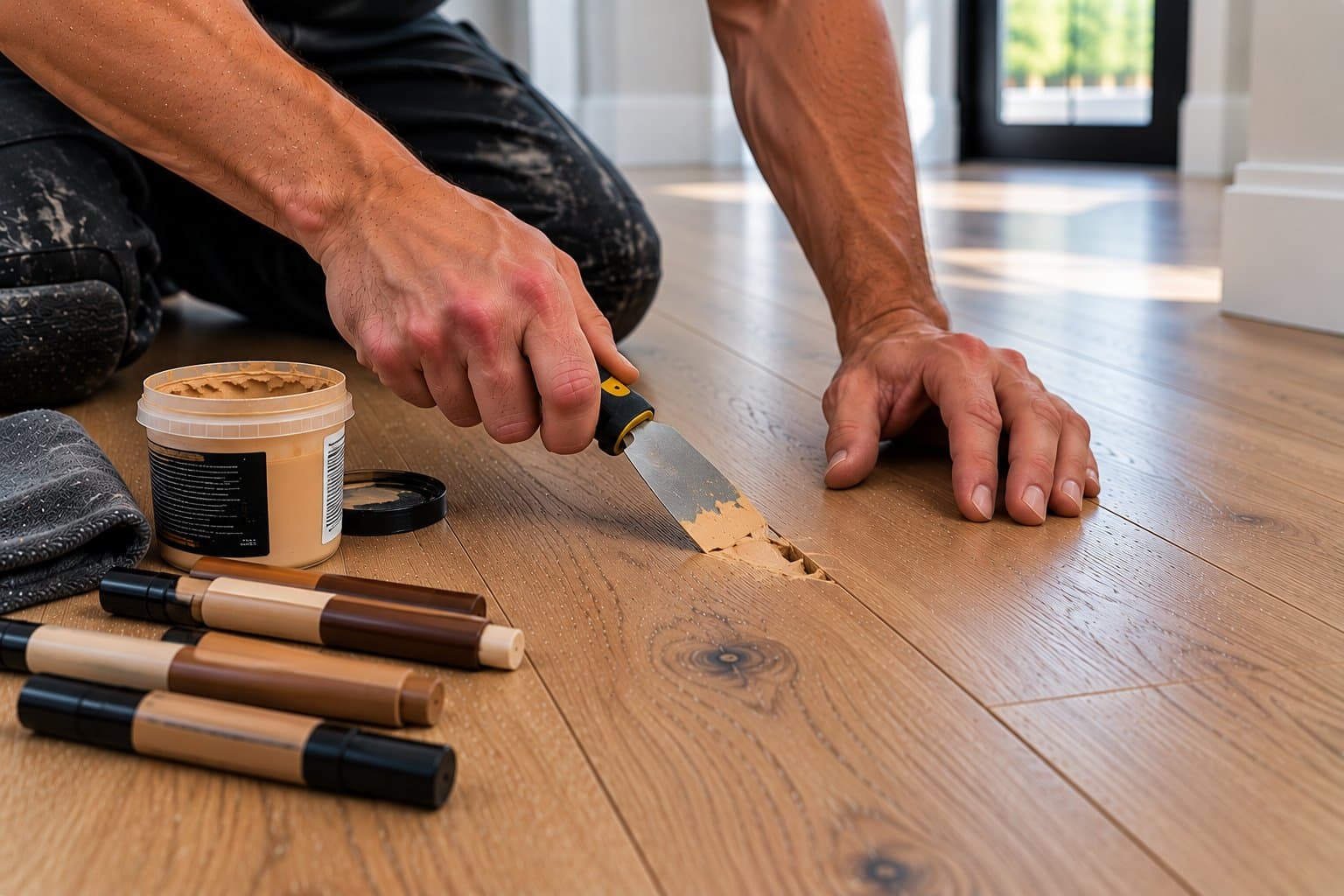
Those two conditions decide every repair. Before quoting, we work out why the floor failed, because a plank swapped in over an active leak or a dip in the subfloor fails again in the same spot. If a repair won't hold or won't match, you'll hear that up front, explained plainly, before any work starts.
Why it matters
Fix the cause, not just the board
Boards swell, seams open and nosings loosen for a reason. We find it first, so the repair doesn't fail again in the same place a few months later.
A straight answer on repair or replace
Being straight with you on a repair means saying when a patch won't match or won't last, rather than selling you one anyway. It's the kind of plain explanation WoodPro's reviewers write about.
Careful with the rest of your floor
Reviewers single out careful removal, and on a repair it matters most. The boards around the damaged one often have to come out and go back in without a mark on them.
Quick to call back
There's usually a same-day callback, across Maple Ridge, Pitt Meadows and the Lower Mainland. A slow leak under a floor or a loose stair nosing shouldn't wait a week for a reply.
The honest version
Pros and cons
Pros
- Usually costs far less than replacing the whole room
- The rest of the floor, trim and transitions stay where they are
- A single-board or nosing repair is usually a short visit, not days of disruption
- Fixing the cause, like a missing expansion gap, can stop the same problem spreading to other seams
- Less flooring goes to the landfill
Cons
- A repair is only as good as the match. A board from a different production run, or one fitted next to boards that have faded in the sun, can show
- If the subfloor or moisture is the problem across the whole room, spot repairs end up chasing it
- Laminate that has swollen from water can't be dried back flat. Those boards have to be replaced
- A plank cut in mid-floor is glued rather than clicked in, so it's harder to take out again later
Repair or replace: how to tell which you need
A repair is worth doing when three things are true: the damage is confined to a few boards or one area, there's a board that matches to put back, and the cause has been found and fixed.
Matching is usually the deciding factor. The best source is leftover boards from the original install, so if there's a part box in the garage or crawlspace, keep it. If there isn't, a board can often be borrowed from inside a closet or pantry and used for the repair, and the closet then gets the closest product still sold. Nobody inspects the back of a closet.
The production run matters as much as the product name. Colour can vary slightly from one run to the next, and floors near big windows change a little after years of sun, so a brand-new board from a fresh box can look a shade off even when it's the same product. A board borrowed from the same floor comes from the same run, which is why it's usually the closer match.
Replacement starts to make more sense in four cases: the damage runs across much of the room, the product is discontinued and nothing close is available, the floor is failing in several places because of the subfloor underneath, or the floor is worn enough that new boards would stand out. At that point a run of repairs tends to cost more in the end than doing the room once.
Something people don't expect: a floating floor often runs unbroken through doorways and down hallways. Replacing one room means cutting the floor at the doorway and adding a transition where there wasn't one before. Worth knowing before you decide.
Damaged planks, lifting seams and water
On a click-together laminate or vinyl floor, a damaged plank near a wall is reached by taking off the baseboard or shoe moulding along that wall, unclicking the rows in between, swapping the board and clicking everything back.
Further into the room, the damaged plank is cut out in place. The replacement has its locking edge trimmed so it can drop in from above, and it's glued to its neighbours. Glue-down vinyl is simpler again: the plank is warmed to soften the adhesive, lifted out, and a new one glued in its place.
Seams that open, peak or lift almost always come back to one of three things: the subfloor isn't flat enough, there's no expansion gap at the walls, or the floor has been pinned down. Pinning comes from a kitchen island or heavy cabinets set on top of it, or trim and transitions fastened through it. A floating floor has to move a little with the seasons. Stop it moving and it pushes up or pulls apart.
The fix is to let it move again. That means cutting back the edge to restore the gap, freeing whatever is pinning it, or lifting the section and filling the low spot underneath. Pushing a gap closed without doing any of that just means it reopens next season. Where the locking edges have already snapped, those boards get replaced.
Water is its own case. Standard laminate has a wood-fibre core, and once water gets into it the edges swell and stay swollen. They don't dry back down, so those boards come out.
Vinyl plank won't swell, but it hides a quieter problem. Water gets through the seams and sits underneath with nowhere to evaporate. The floor can look perfect while the subfloor below it stays wet, which is how mould starts. After a real leak, the affected area should come up so the subfloor can be checked and dried.
Either way, the leak gets fixed first. If the subfloor has swollen or gone soft, that has to be dealt with before any flooring goes back down, and we'll show you what we find before going further. If a laminate room is past saving, waterproof laminate is worth considering for the replacement: it's built to resist water at the surface and the joints, which is where standard laminate lets it in. It's made for spills rather than floods, though, and it won't protect the subfloor from a leak nobody notices.
Squeaks, transitions and stair nosings
Most squeaks come from the subfloor, not the flooring: a panel moving against a joist, or rubbing on a nail that has worked loose. On a floating floor, a crackle or click underfoot is more often boards flexing over a dip.
Where the ceiling below is open, as in an unfinished basement, a subfloor squeak can sometimes be fixed from underneath without touching the floor. Otherwise the section comes up, the subfloor is screwed down to the joists or the dip is filled, and the boards go back. Click boards usually survive being taken up and relaid, though not always, which is another reason to keep spares.
An honest note: a floating floor sounds a little more hollow than one that's glued or nailed down. That comes from how it's built rather than from a fault, and a repair won't change it.
Transition strips, where your floor meets carpet, another floor or a doorway, get kicked, cracked and pulled loose. The usual fix is to reset or replace the track and fit a new strip. The strip should hold the edge of the floor down without being fastened through it, because a transition screwed through a floating floor is one of the common causes of lifting seams. When the original profile is discontinued, a neutral strip that suits both floors usually looks better than a near-miss.
Stair nosings take more impact than any other part of the floor. On laminate and vinyl stairs they loosen when the adhesive lets go, or crack along the front edge. A loose nosing is a trip hazard right where your foot lands on the way down, so it's worth fixing promptly.
A loose nosing is pulled off, cleaned back to bare material and reset with adhesive and fasteners. A cracked one is replaced. If the original nosing is no longer made, or you're tired of the bulky overlap moulding that comes with most floors, custom square nosings made to match the floor are an option, usually across the whole flight so every step matches.
FAQ
Repairs: common questions
Something we haven't covered? Ask — the person who answers is the one who does the work.
Can you replace one damaged plank without taking up the whole floor?
Usually, yes. Near a wall, the rows between the wall and the damaged plank are unclicked and put back. Further into the room, the plank is cut out and a replacement glued in. What decides it is having a board that matches, so check the garage for leftovers before you call.
I don't have any spare boards. Can it still be repaired?
Often. The product name on an old receipt or box label helps track down the same floor, and if it's still sold that's the simplest route. If it isn't, a board can be borrowed from a closet and the closet filled with the closest match. If nothing comes close, we'll say so, and the options become a deliberate change at a doorway or replacing the room.
My laminate got wet and the edges have lifted. Will it flatten as it dries?
No. The core is compressed wood fibre, and once it swells it stays swollen. Those boards need replacing, but only after the leak is fixed and the subfloor underneath has been checked. Fans blowing across the top of the floor won't dry what's under it.
Why do gaps keep opening in the same few seams every winter?
Laminate's wood-fibre core shrinks a little when heating dries the air. Normally the whole floor moves together and you'd never notice. If part of it is pinned, say under a kitchen island or by trim fastened through it, or a joint flexes over a dip every time someone walks on it, that movement concentrates at a few seams and pulls them open. Freeing the floor or filling the dip is what stops it coming back.
Can you fix a floor that someone else installed?
Yes. The repair depends on the floor and what went wrong with it, not on who put it down. If the original install caused the problem, such as a missing expansion gap, we'll show you that too, so you know the repair deals with the cause.
Goes well with
Related services
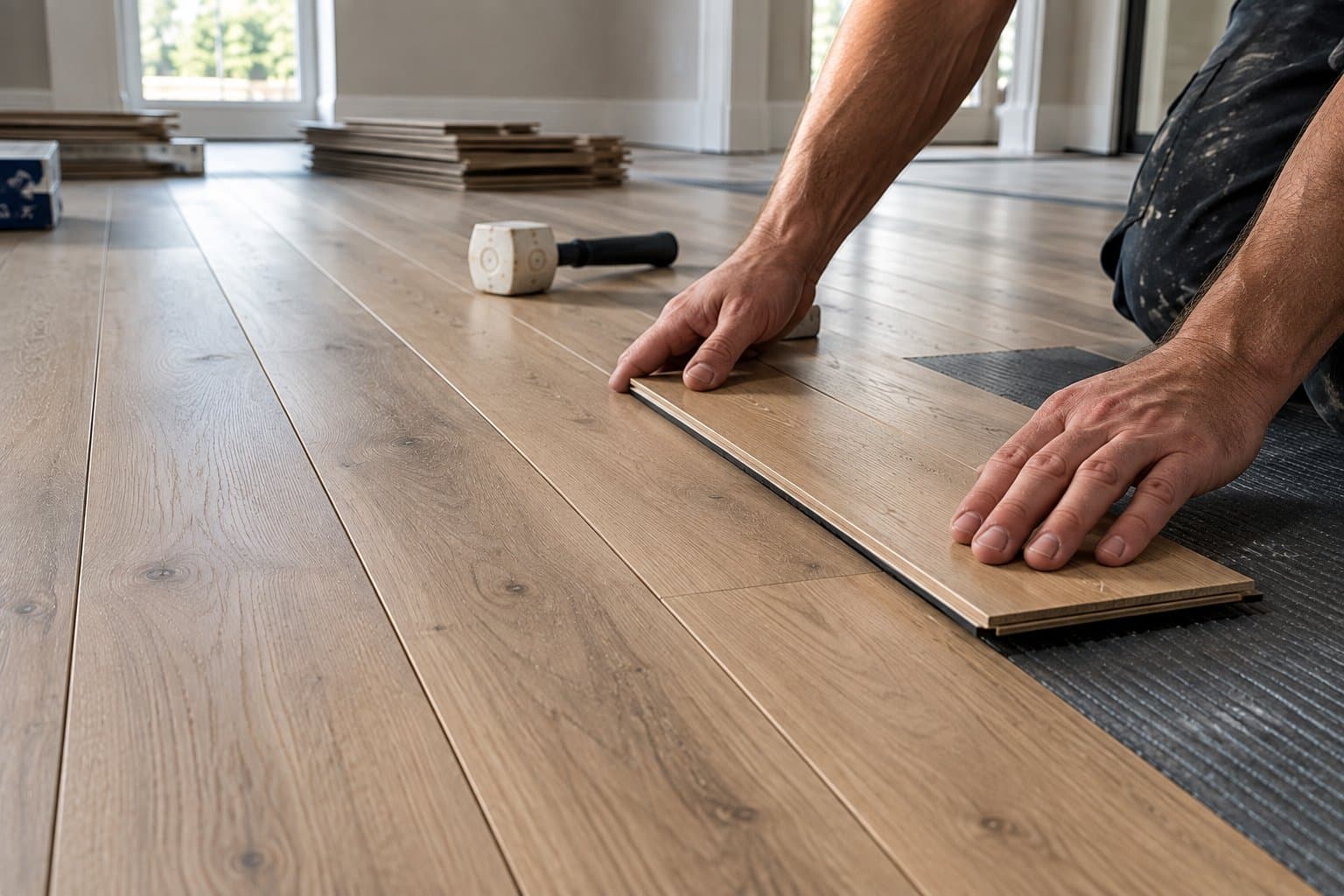
Flooring Installation
We install waterproof laminate, vinyl plank, engineered and solid hardwood, and luxury vinyl tile over a checked subfloor, with the gaps, underlay and transitions each product needs.
Learn more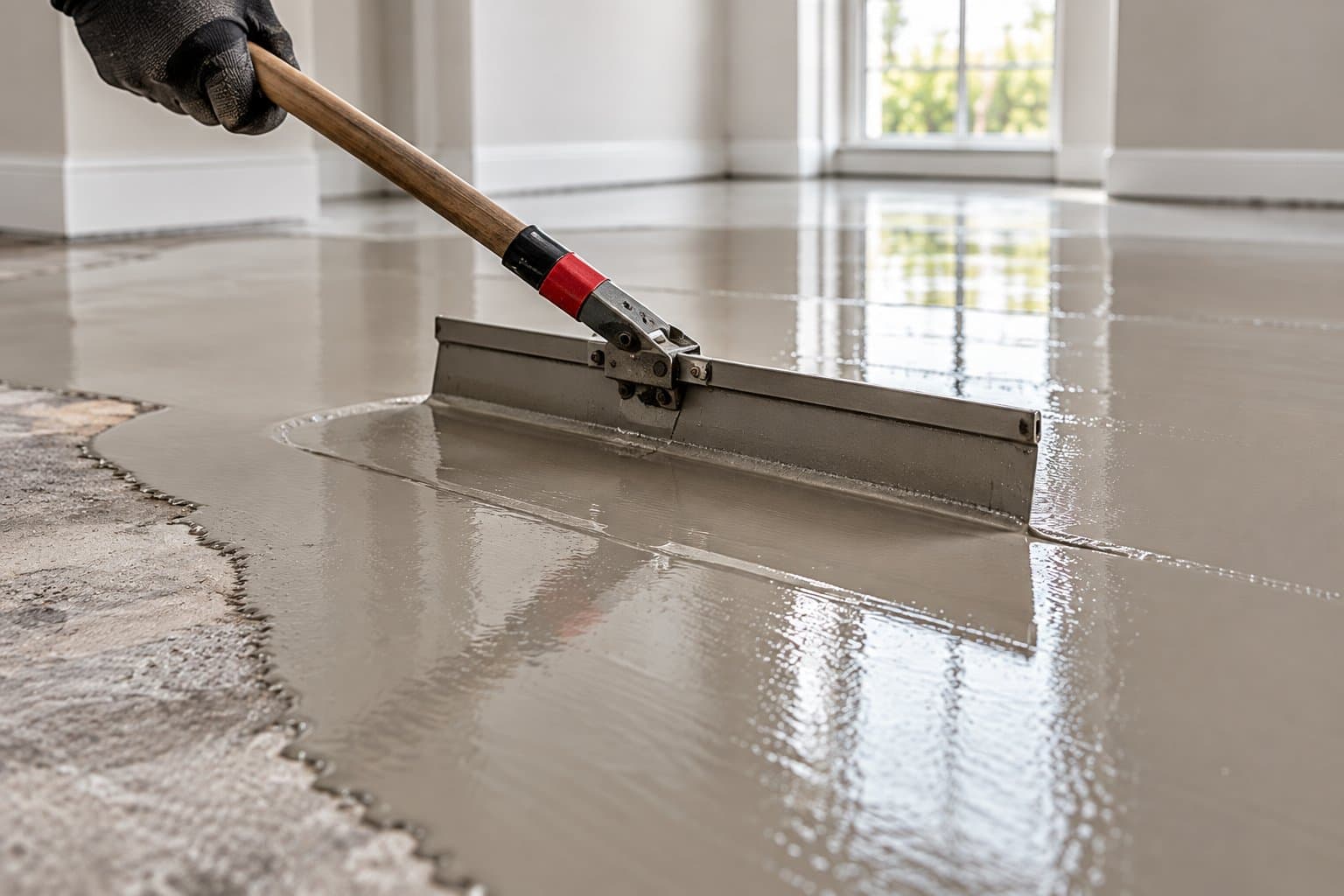
Floor Levelling
High spots ground down and low spots filled before the new floor goes in, so the planks sit flat instead of flexing at the seams with every step.
Learn more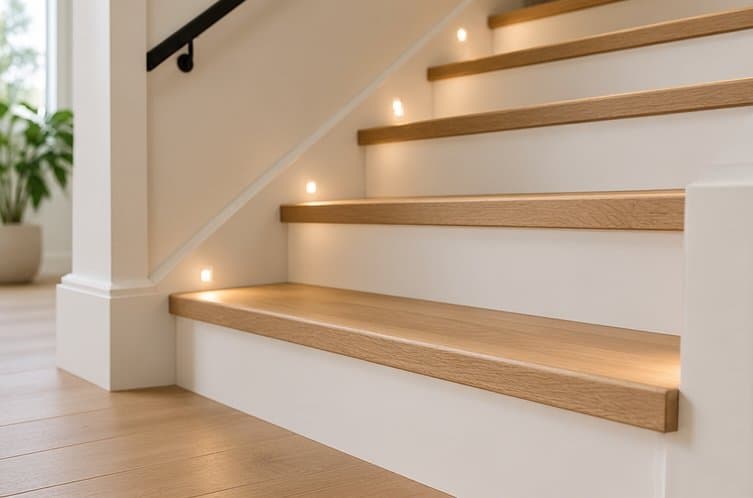
Custom Stair Installation
The carpet comes off and treads, risers and custom square nosings go on, matched to your new floor and planned for safe footing.
Learn more
Free Estimate
Let's talk about your floor.
Call (604) 787-5557 or request a Free Estimate online. The on-site measure is free, there's no obligation, and you'll usually hear back the same day.