Published
How do you clean hardwood floors without damaging them? Keep grit off them, clean them dry most of the time, and use as little water as possible when you do mop. Most hardwood damage doesn't come from one big accident. It comes from small everyday habits: a wet mop that soaks the seams, a steam mop, a shine product that builds up, or sand tracked in on wet boots all winter. Here's how to clean and care for hardwood floors in a Lower Mainland home, and the products that should never touch them.
This is general guidance. The maker of your floor and its finish has the final say, so check their care instructions first.
How to clean hardwood floors day to day
Whether you have solid hardwood or engineered flooring, what you walk on is a clear finish over real wood. Keep the finish in good shape and the wood underneath stays looking new. A simple routine:
- Sweep, dust-mop or vacuum a few times a week, more often in entries and kitchens. Grit is the real enemy: under shoes and chair legs it works like sandpaper on the finish.
- Use a soft-bristle broom, or a vacuum on its hard-floor setting with the beater bar (the spinning brush) turned off.
- Run a microfibre dust mop between vacuums. It picks up fine dust and pet hair without scratching.
- Wipe up spills straight away with a dry or barely damp cloth, before the water can reach the seams.
- Every week or two, or when the floor starts to look dull, damp-mop it with a cleaner made for finished wood floors.
What is the best way to mop hardwood floors?
Damp, never wet. A good rule of thumb: if the floor isn't dry within a minute or two, the mop is too wet. Spray a pH-neutral cleaner made for finished hardwood, ideally the one your floor or finish maker recommends, onto the floor or onto a microfibre pad, and mop along the length of the boards. Rinse or change the pad often so you're lifting the dirt, not spreading grit around.
That advice is for floors with a surface finish, such as polyurethane or the hard factory finish on most prefinished boards, which covers most modern floors. Floors finished with a hardwax oil or a penetrating oil need the oil maker's own soap and an occasional refresher coat. A floor that was waxed years ago is a different case again, and water-based cleaning isn't the way to look after it.
What never to use on hardwood floors
These are the things most wood flooring and finish makers warn against:
- Steam mops. Heat and steam push moisture into the seams and can cloud or lift the finish. Many manufacturers say using one can void the warranty.
- Soaking wet mops and buckets of water. Water left on the seams soaks into the edges of the boards and can make them swell and cup.
- Vinegar, ammonia and bleach. Over time they can dull and wear down the finish.
- Oil soaps, wax and "shine restorer" polishes on a polyurethane floor. They leave a film that builds up, looks hazy, can make the floor slippery, and can stop a fresh coat of finish from sticking when the floor is recoated later.
- Scouring powders, abrasive pads and steel wool.
- Some rubber- or latex-backed rugs and mats, which can discolour the finish and trap moisture underneath. Look for mats labelled safe for hardwood.
- A vacuum with the beater bar spinning, which can scratch the finish and chip the edges of the boards.
The polish point matters more than most people expect. As our floor refinishing page explains, wax and shine products are one of the reasons a new coat of finish can peel, so a floor that's had them needs a test patch before it's recoated.
Rain, grit and dry winter air: hardwood floor care in the Lower Mainland
Our weather is hard on wood floors in two ways. From fall to spring, wet boots, umbrellas and dogs bring in water and fine grit from wet sidewalks and gravel driveways, and most of it lands on the first few steps inside the door. A good mat outside, another inside, and a tray for wet boots catch most of it before it reaches the floor.
Then the heat comes on and the air indoors turns dry. The wood gives up a little moisture and shrinks, so thin gaps can open between boards in January and close again in spring. That's normal, and it's not something to fill. Most manufacturers ask you to keep indoor humidity roughly between 35 and 55 per cent. An inexpensive hygrometer tells you where your house sits, and a humidifier helps if it's very dry.
Too much moisture is the other side of it. Boards with their edges higher than their centres, called cupping, usually point to damp from below, such as a crawlspace with bare soil, or to a leak. That has to be fixed at the source before the floor itself is touched.
How to protect hardwood floors from scratches and dents
- Felt pads under every chair and table leg, replaced when they wear thin or pick up grit.
- Lift heavy furniture and appliances into place. Never slide them.
- A rug or chair mat under office chairs, because rolling casters are hard on any finish.
- Keep pets' nails trimmed.
- Shoes off at the door, especially high heels and boots with grit in the treads.
- Blinds or curtains on big sunny windows. Sunlight changes the colour of wood over time, and moving rugs around now and then avoids a sharp outline.
- Pet water bowls and plant pots on a waterproof tray. A slow leak over weeks can leave dark stains in the wood that sanding may not take out.
From a customer
“Danny and Vlad were great. Highly professional we are very happy with our Hardwood floor and the finished base boards. This company is very reasonable and these boys take pride in their work. Would highly recommend.”
When cleaning isn't enough: recoat, refinish or repair
Even with good care, the finish wears through in the busiest paths. Try the water test: put a few drops of water on the most worn spot and leave them for a few minutes. If they bead up, the finish is still sealing the wood, and a screen and recoat (a light scuff and a fresh coat of finish) may be all it needs. If the water soaks in and darkens the wood, the wear has reached the wood, and a full sand and refinish is what brings it back.
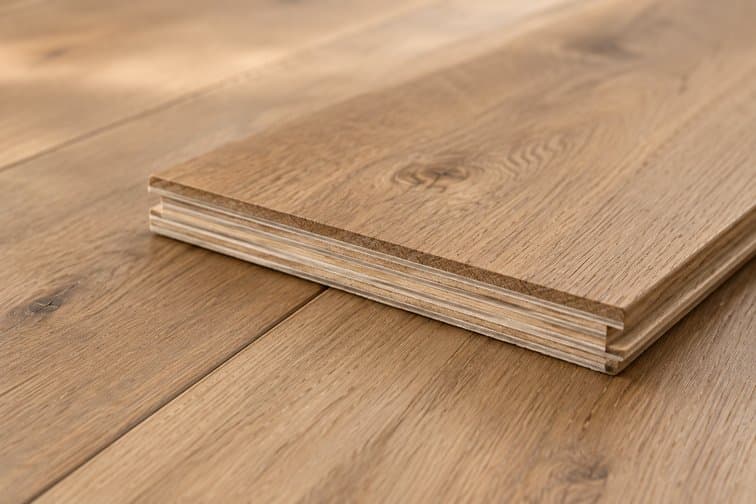
A solid hardwood floor can usually be sanded several times over its life. Engineered hardwood depends on the thickness of its real-wood top layer, and a thin one can't be sanded at all, which is one more reason to protect the finish. Deep gouges, water-stained boards and loose or squeaky boards are a job for floor repairs: damaged boards can be cut out and replaced with matching wood, ideally before any refinishing.
And when a floor is past saving, new flooring installation is the last step. As a ballpark, WoodPro's labour for nail-down solid hardwood is $7 to $9 per square foot, and for floating engineered hardwood $4 to $5 per square foot, before GST. Refinishing is priced on site, once we've seen how much wood is left. Our flooring cost per square foot guide has the full breakdown.
Is vinegar and water safe for hardwood floors?
It's a popular tip, but most floor and finish makers advise against it. Vinegar is acidic, and used again and again it can dull the finish. A pH-neutral cleaner made for hardwood is the safer choice.
Can you use a spray mop or a Swiffer on hardwood?
A dry dusting pad is fine any time. For wet cleaning, a microfibre spray mop filled with a hardwood cleaner works well, as long as it leaves the floor barely damp. Avoid all-purpose wet pads that leave a film behind, and check your floor's care guide, since some makers name a cleaner.
Do engineered hardwood floors need different care?
Day to day, no: dry clean often, damp-mop sparingly, and never steam. The difference shows when the floor is worn. Engineered can only be sanded if its wood top layer is thick enough, so looking after the finish matters even more. If you're comparing floors for a busy home, luxury vinyl plank is the low-maintenance alternative, and our post on whether vinyl plank is really waterproof explains where it shines.
How often should hardwood floors be refinished?
There's no set schedule. It depends on foot traffic, pets and how well grit is kept off the floor. A busy family home will show wear in the traffic paths much sooner than a quiet bedroom. The water test above tells you whether a recoat will do or the floor needs a full sand.
Need your hardwood floor looked at?
If your floor looks dull, scratched or grey in the traffic paths, Danny can come out for a free on-site measure, check how much wood is left, and tell you plainly whether it needs a recoat, a refinish, a repair or a new floor. Call (604) 787-5557 to book, or browse finished floors in Our Work. We work across the Lower Mainland and Fraser Valley: Maple Ridge, Pitt Meadows, Mission, Langley, Surrey, Coquitlam, Port Coquitlam, Port Moody, Burnaby and New Westminster.