Published
Is vinyl plank flooring really waterproof? The plank is. The floor, as a whole, isn't. Luxury vinyl plank has a core that doesn't soak up water, so a spill, a pet accident or a puddle from wet boots won't swell or ruin it. But water that gets underneath, through the seams, at the walls or up from a concrete slab, is a different problem. Here's what the waterproof label really covers, how SPC and WPC vinyl differ, and how we protect basements, kitchens and laundry rooms across the Lower Mainland.
This is general guidance. Every product has its own installation instructions and warranty, and those have the final say.
What "100% waterproof" means on a box of vinyl plank
On a box of luxury vinyl plank, "100% waterproof" describes the plank itself. Its core is made of plastic-based materials that don't absorb water, so even if water sits on the floor for a while, the plank won't swell, bubble or come apart. That's the big difference from floors with a wood-based core.
What it doesn't promise is a waterproof room. A floating vinyl floor is lots of planks clicked together, with a small expansion gap around the edges, hidden under the baseboards. Water can run through the joints, down that gap at the walls, or come up from underneath. Once it's under the floor, vinyl doesn't let it dry back out, and the subfloor is what suffers. Over plywood, left long enough, that means swelling, mould and rot.
SPC vs WPC: which waterproof vinyl plank is better?
Both are rigid-core vinyl, and both are waterproof. The difference is the core:
- SPC (stone plastic composite) has a dense core made mostly of limestone powder and PVC. It's hard, it resists dents from appliances and heavy furniture, and it moves less as the room warms and cools. That makes it the safer choice beside big sunny windows, over concrete and across long open-plan runs.
- WPC (the letters first stood for wood plastic composite) has a thicker, foamed plastic core. It's softer, warmer and a little quieter underfoot, which suits bedrooms and living rooms. The trade-off: it dents more easily under chair legs and narrow table feet, and it moves a bit more with temperature.
For water, they're equal: neither core soaks up a spill. For a basement, a laundry room or a busy kitchen, we usually lean toward SPC because it's harder and more stable. The wear layer, the clear top coat, matters as much as the core: a thicker wear layer stands up better to grit, claws and chairs. Our luxury vinyl plank page goes through how to pick one.
Waterproof vs water-resistant flooring
"Water-resistant" means a floor buys you some time to wipe up a spill before it does damage. "Waterproof" means the plank itself won't be damaged by water on its surface. The words get mixed up a lot, so it helps to know what each floor is made of:
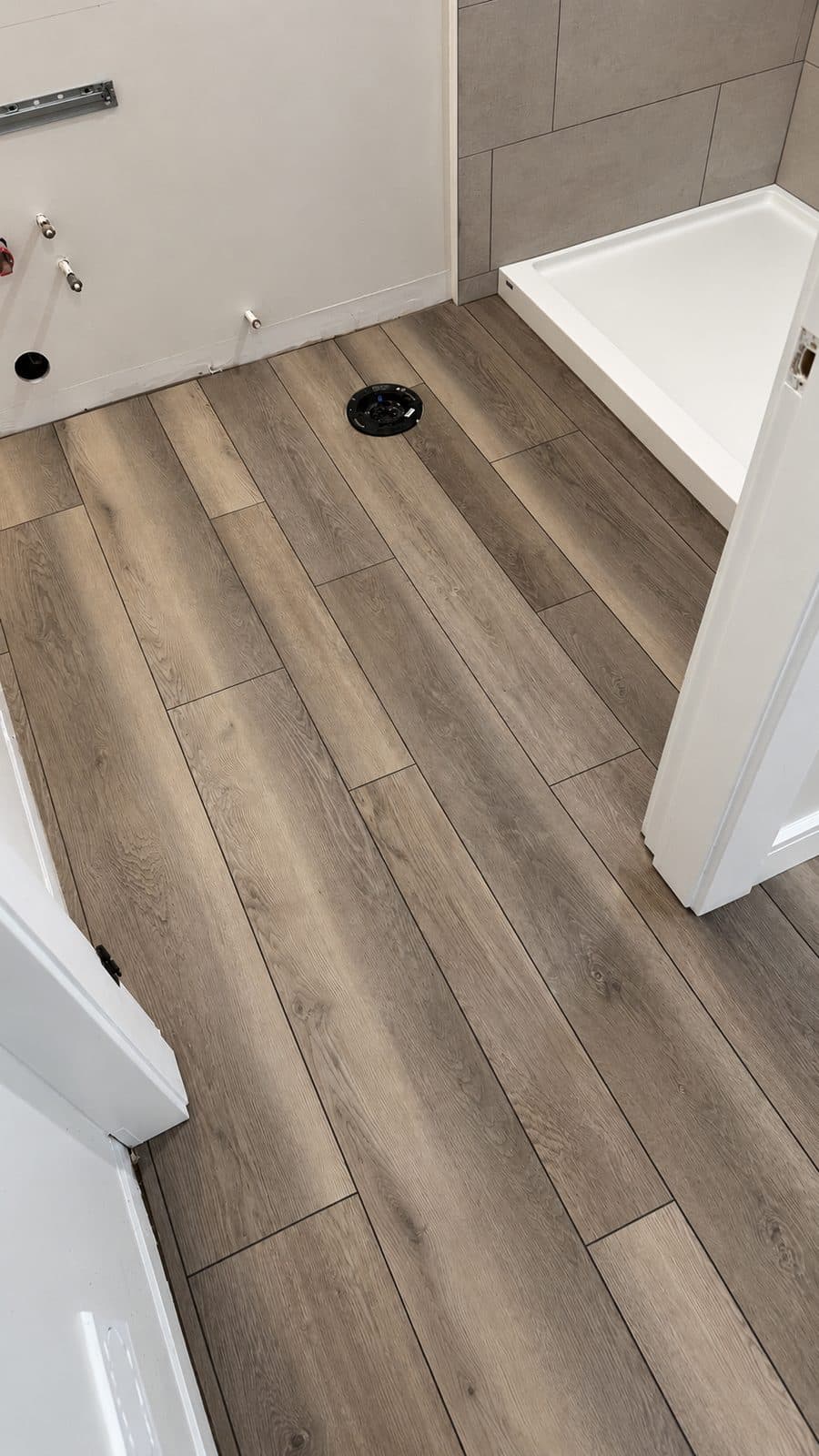
- Vinyl plank and vinyl tile: waterproof cores. The best choice for bathrooms, laundry rooms and basements.
- Waterproof laminate: the core is still wood fibre. Its waterproof rating covers water on top of the floor for a set number of hours, not water underneath. Great for kitchens and main floors where spills get wiped up.
- Engineered flooring and solid hardwood: real wood, so not waterproof. A wiped-up spill is fine; standing water or a slow leak isn't.
If you're deciding between the first two, our post on waterproof laminate vs vinyl plank compares them side by side.
Where vinyl plank's waterproofing stops
These are the situations where water still causes trouble under a waterproof vinyl floor:
- A slow leak you don't see: a dishwasher, fridge water line or washing machine that drips under the floor for weeks.
- A flood. Standing water runs in at the edges and sits on the subfloor. The planks survive; what's under them may not.
- Moisture rising through a concrete slab, which gets trapped under the floor if there's no vapour barrier.
- Open edges around tubs, showers and toilets. Many manufacturers ask for those gaps to be sealed with a flexible silicone so water can't run down them.
- Steam mops. Many vinyl manufacturers warn against them, because the heat and steam can work into the joints.
Most warranties follow the same line: they cover the plank, not damage to the subfloor or the home from water getting underneath. It's worth reading what yours says about basements and bathrooms before you buy.
Is vinyl plank good for basements in the Lower Mainland?
Yes. It's usually the best choice for a basement on concrete, as long as the slab is checked first. Our wet winters and low-lying ground mean a lot of slabs carry moisture. In Pitt Meadows, about 85 per cent of the city sits in the Fraser and Pitt River floodplain, and in much of it the water table is close to the surface. In Port Coquitlam, many older basements were poured with no plastic sheet under the concrete, so moisture moves up through the slab all year, and parts of lower Riverwood sit close to the Coquitlam River flood plain.
On a slab like that, a floating vinyl plank floor over a vapour barrier underlay is the usual answer. The core won't swell from a damp season, and if water does get underneath, a click floor can usually be lifted so the concrete can dry, instead of being scraped off like a glued floor. Before anything is ordered, the slab gets a moisture check and a flatness check. A rigid plank over a dip flexes at the joints and can break them, so any dips are fixed with levelling first.
From a customer
“We started a kitchen and laundry room reno due to a very messy flood. Danny was introduced to us by our contractor, and we could not be happier. He was able to level the floors and install the most awesome luxury vinyl and we are lucky to have found him. The team was on time, and meticulous in cleaning up. The quote was fair. We strongly endorse Danny and his team.
Teresa and Dusan Berka”
How to get the most water protection from a vinyl floor
- Choose a rigid-core SPC plank for basements, laundry rooms and bathrooms.
- Get the slab tested for moisture and use the underlay or vapour barrier the manufacturer calls for.
- Make sure the subfloor is flat, so the click joints stay tight and don't open up over time.
- Seal the expansion gap around tubs, showers and toilets where the instructions say to.
- Put a drip tray under the washing machine and check the dishwasher and fridge lines now and then.
- Wipe up spills, and clean with a damp mop, not a steam mop.
Can you put vinyl plank in a bathroom?
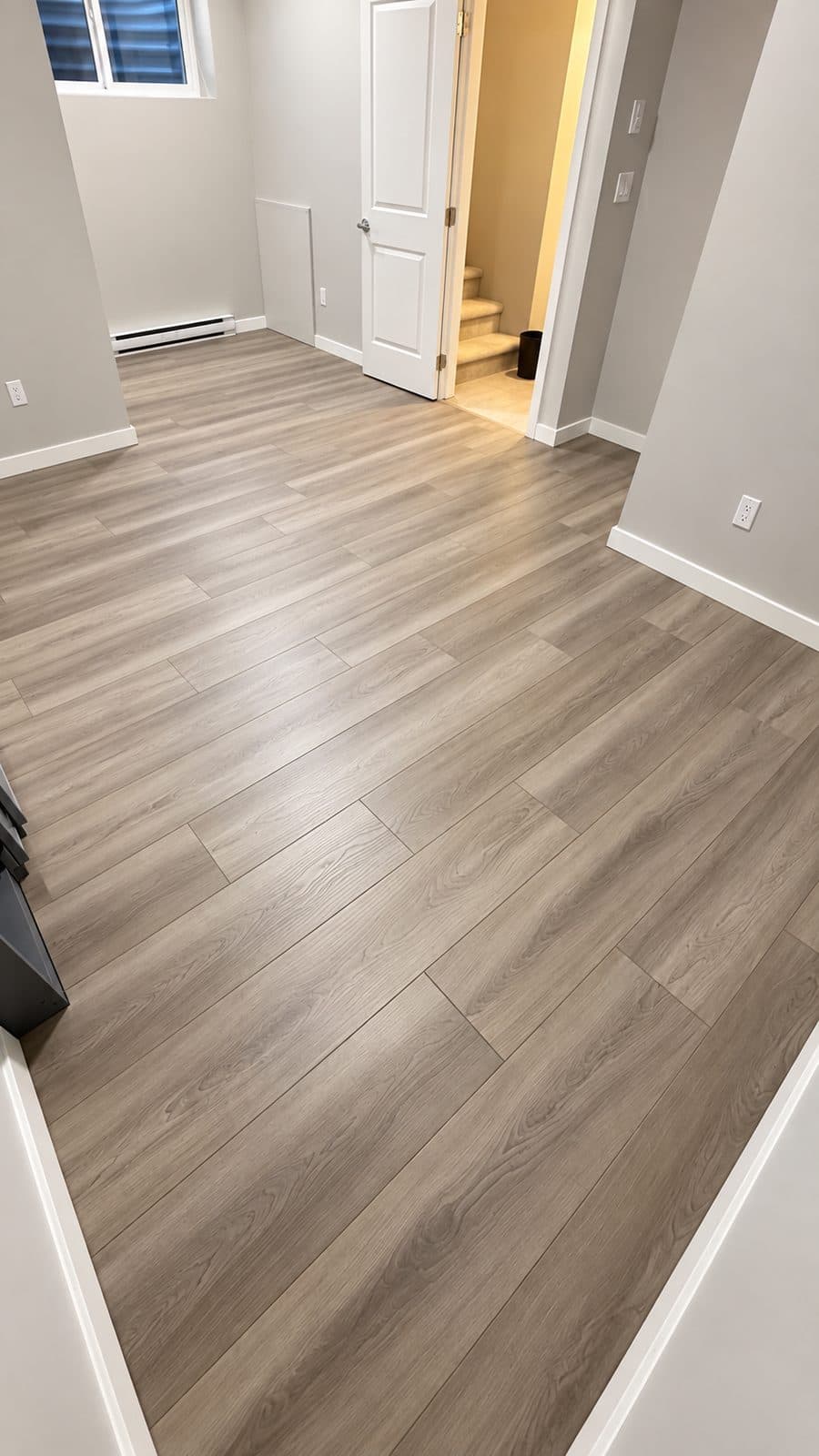
Yes, on the bathroom floor, with the edges sealed along the tub, the shower and the toilet. Not inside the shower itself: a shower needs its own waterproof base. For a stone look, vinyl tile does the same job.
What happens if vinyl plank flooring gets flooded?
The planks themselves usually come through fine. The concern is the water trapped underneath. A floating click floor can often be taken up, the subfloor dried out and checked, and the same planks put back down if they're undamaged. A glued-down floor is much harder to save.
How much does waterproof vinyl plank cost to install?
As a ballpark, WoodPro's flooring installation labour for luxury vinyl plank is $2.50 to $3.50 per square foot, before GST. If we supply the plank, add about $3.50 per square foot. Removal of the old floor and any levelling are extra and priced at the measure. Our flooring cost per square foot guide has the full breakdown, and if the old floor is tile, see whether new flooring can go over old flooring.
Get the right waterproof floor for your home
Danny comes out for a free on-site measure, checks the slab or subfloor for moisture and flatness, and tells you plainly which floor suits the room. Call (604) 787-5557 to book, or browse finished floors in Our Work. We install across the Lower Mainland and Fraser Valley: Maple Ridge, Pitt Meadows, Mission, Langley, Surrey, Coquitlam, Port Coquitlam, Port Moody, Burnaby and New Westminster.